


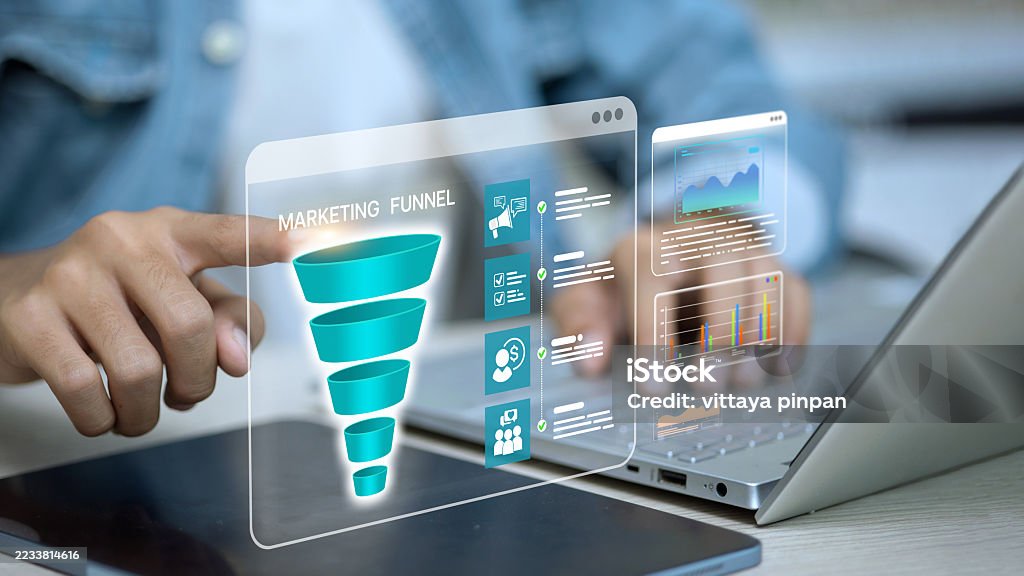
Executive Summary: A SaaS marketing funnel maps the customer journey from first brand exposure to advocacy, guiding prospects through Awareness, Acquisition, Activation, Retention, Revenue, and Referral stages. Well-designed funnels align tactics and metrics at each stage, improving conversions and growth. For example, companies with clearly defined funnels see 23% higher conversion rates. This article explains each funnel stage and tactics, key metrics (traffic sources, MQL/SQL conversion, activation rate, churn, LTV, CAC, etc.), essential tools, content examples, and a step-by-step checklist. It includes a funnel flowchart (see below), channel comparisons, pitfalls, and mini case studies, all grounded in industry best practices.
What Is a SaaS Marketing Funnel and Why It Matters
A marketing funnel is the model that visualizes how prospects move from awareness of your product to becoming paying and then loyal customers. In SaaS, the funnel extends beyond a single purchase into onboarding, usage, and advocacy. It provides a roadmap for aligning content and campaigns – from broad top-of-funnel (ToFU) awareness (SEO, social, paid ads) through middle-of-funnel (MoFU) nurturing (webinars, email sequences, trials) to bottom-of-funnel (BoFU) conversion (pricing pages, demos). Funnel thinking lets teams diagnose drop-offs (e.g. a high churn or low activation) and optimize accordingly. In fact, well-documented funnels drive results: high-growth firms often use advanced funnel mapping on every stage, and those with clear funnels enjoy ~23% better conversion. By contrast, surveys find 68% of companies haven’t even evaluated their funnels, and many see marketing leads fail to convert. Systematically building a funnel “from problem recognition to renewal” bridges that gap.
Key Funnel Stages and Tactics
A modern SaaS funnel (often called “AARRR+Awareness”) has six linked stages: Awareness → Acquisition → Activation → Retention → Revenue → Referral. Each stage has distinct goals and tactics. Below we outline each stage with proven strategies:
- Awareness: Capture attention and educate potential users about their problem (not just your product). Use SEO-driven content (blog posts, guides) and shareable assets (infographics, webinars, thought-leadership) to rank for buyer intent keywords and broaden reach. Paid ads (Google, LinkedIn) and social media amplify discovery. Outreach like guest posts or PR can also raise brand profile. For example, building a robust SEO content strategy often takes 6–12 months to pay off, but it yields compounding organic traffic – one SaaS saw 340% organic growth over 18 months, with those visitors converting 23% better than paid leads.
- Acquisition: Convert interested visitors into leads or trial users. Offer clear entry points: optimized landing pages with value propositions, free demos or trial signups, gated lead magnets (whitepapers, checklists) tailored to user intent. Interactive tools (quizzes, calculators) and personalization (dynamic forms, email capture) can boost engagement. Incentivize signups with webinars or free trials. For instance, CatchDigital notes that in SaaS, “the next challenge [after awareness] is converting interest into leads or trial users,” using tactics like quizzes and personalized lead magnets. As a rule of thumb, about 10–20% of Marketing Qualified Leads (MQLs) progress to Sales Qualified Leads (SQLs) in many SaaS funnels. Figure: Strategies for the Consideration (acquisition) stage of the funnel (image: Mouseflow)
- Activation: Ensure new users experience the product’s core value quickly (“the aha moment”). Effective onboarding is key: guided product tours, contextual tooltips and in-app messages, progressive tutorials, or walkthrough checklists all help users reach an “activated” state (e.g. complete first task) fast. Simplify trial setup (short forms, easy login) and send welcome/onboarding emails with tips and next steps. Well-implemented onboarding can double the trial-to-paid conversion rate. Micro-conversions (first feature use) are early indicators, so track and nudge users as they progress.
- Retention: Once customers see value, keep them engaged. Build loyalty through proactive communication: lifecycle email campaigns, loyalty/reward programs, and in-app re-engagement triggers. Provide readily accessible support: a knowledge base, live chat or Intercom-style in-app chat, responsive support teams, and community forums. Use AI or analytics to predict churn and intervene with offers or check-ins. (Harvard Business Review notes a 5% lift in retention can boost profits by 25–95% – underscoring why retention is much cheaper than new acquisition.) Fostering a community (user events, forums) also improves stickiness. Figure: Strategies for the Decision (conversion) stage (image: Mouseflow)
- Revenue: Maximize value from each customer. Upsells, cross-sells, and add-ons should be offered contextually (in-app or via email) once users are engaged. Optimize pricing and billing: clear tiered plans, usage-based billing, and automated renewal reminders reduce friction. CatchDigital reports that about 70% of SaaS revenue comes from expansion (upsells/renewals) rather than new sales. A/B test pricing pages and CTAs to reduce drop-off. Track the CLTV:CAC ratio – healthy SaaS aims for ~3:1 (i.e. lifetime value about three times customer acquisition cost). Figure: Strategies for the Retention stage (image: Mouseflow)
- Referral: Turn satisfied customers into advocates. Referral programs with double-sided rewards (benefits for both referrer and referee) are highly effective. User-generated content (testimonials, reviews, case studies) and social sharing buttons make it easy for customers to spread the word. Some SaaS brands incentivize referrals through gamification (leaderboards, badges) or simple shareable links. Referral customers tend to be very sticky – one source notes referred users have ~37% higher retention, yielding compound growth.
Mermaid Flowchart of Funnel Stages:
graph TD
Awareness --> Acquisition
Acquisition --> Activation
Activation --> Retention
Retention --> Revenue
Revenue --> Referral
Referral --> Awareness
This loop illustrates how each stage feeds the next, with referrals driving new awareness.
Key Metrics and KPIs to Track
Tracking the right metrics at each funnel stage is crucial. Key indicators include:
- Traffic Sources: Monitor visitors by channel (organic search, paid ads, social, referrals, etc.) using Google Analytics or a dedicated analytics tool. This shows where qualified traffic originates, helping allocate budgets effectively.
- Leads (MQLs, SQLs): Count Marketing Qualified Leads (prospects meeting basic criteria) and Sales Qualified Leads (passed to sales). A benchmark MQL→SQL conversion is around 13%. Track lead-to-customer conversion at each step.
- Activation Rate: Percentage of new users who reach “first value” (e.g. complete a key onboarding step). Low activation indicates onboarding friction. Industry data suggest optimized onboarding can double trial-to-paid conversions.
- Churn Rate: Monthly % of customers canceling. Healthy SaaS churn is typically under 5% per month. Rising churn signals retention issues.
- Lifetime Value (LTV/CLTV): Average revenue per customer over their lifespan. Keep CLTV in mind when assessing CAC. A target CLTV:CAC of ~3:1 is common.
- Customer Acquisition Cost (CAC): Total marketing/sales spend to acquire a customer. Lowering CAC by optimizing the funnel is a key goal.
- Conversion Rates (by stage): E.g. visitor→lead, lead→trial, trial→paid. Benchmarks: trial-to-paid often ~2–5% for self-service SaaS. Monitor step-by-step conversion to spot bottlenecks.
- Funnel Velocity: Time it takes prospects to move through the funnel. Faster velocity means less friction.
- Engagement (NPS, usage): Once customers are onboarded, metrics like product usage rates, Net Promoter Score, or in-app behaviors indicate satisfaction and upsell potential.
Regularly review these metrics (e.g. weekly dashboards) to spot issues. SaaS experts note that companies tracking stage-specific KPIs achieve ~2.4× faster revenue growth than those tracking only top-line metrics.
Essential Tools and Integrations
A stack of integrated tools streamlines funnel building and measurement:
- Analytics & Attribution: Google Analytics or Mixpanel/Amplitude for tracking web and in-app user behavior. These tools visualize funnels and drop-off points. For example, Mixpanel provides event-based funnel reports to identify where users stall. Attribution platforms like Cometly or Fivetran link ad spend to revenue across channels.
- CRM: A system like HubSpot CRM or Salesforce to manage leads and their qualification status. HubSpot’s CRM can capture MQL/SQL signals in one place and automate segmentation.
- Email Marketing/Automation: Platforms such as Mailchimp, Customer.io, or HubSpot Marketing for newsletters and drip campaigns. Automate onboarding sequences and retention emails.
- Product Analytics: Tools like Mixpanel or Amplitude track in-app events for activation and retention analysis. They help answer “what users do inside the app,” enabling feature adoption analysis.
- A/B Testing: Optimizely, VWO, or Google Optimize allow split-testing of landing pages, CTAs, emails and pricing pages to improve conversions. Testing is part of a data-driven funnel approach.
- Integrations: Connect tools with Zapier or Segment to sync data (e.g. push CRM leads from ad tools, or send user actions to analytics). Integration ensures a unified view of the funnel.
Content and Campaign Examples
Successful SaaS funnels use diverse content and campaigns at each stage:
- SEO & Blogs: In Awareness, publish in-depth guides and how-tos targeting buyer pain points (e.g. “How to reduce SaaS churn”). Evergreen SEO content compounding over time.
- Paid Ads (PPC): Search ads (Google, Bing) and social ads (LinkedIn, Facebook) to capture high-intent queries. Paid campaigns drive immediate leads and allow rapid A/B testing of messaging.
- Webinars/Video: Educational webinars on industry topics or product demos engage mid-funnel leads. Webinars are cost-effective (vs. physical events) and can convert 5–20% of registrants into customers. Always follow up registrants with nurture emails.
- Free Trials/Demos: Offering a free trial or live demo is a classic Acquisition tactic. Gate the trial with a short form; once users sign up, immediately onboard them (see Activation above). Email reminders during the trial can boost activation.
- Case Studies & Whitepapers: In the consideration stage, deliver case studies or competitive comparison guides to prove ROI. These help reduce buyer anxiety.
- Onboarding Emails & In-App Messaging: Send welcome emails with usage tips and trigger in-app messages or tooltips as users navigate the product. For example, automated “Get Started” emails or in-app popups for incomplete tasks push activation.
- Retargeting Campaigns: Use remarketing ads (e.g. on LinkedIn or Google Display) to re-engage visitors or free trial users who didn’t convert yet.
- Referral Campaigns: Encourage existing customers to refer peers via email prompts or incentives. Example: “Give $50, Get $50” credits.
By aligning content to each stage (ToFU SEO/blog, MoFU case studies/webinars, BoFU trials/demos), you accelerate movement through the funnel.
Funnel-Building Checklist
A step-by-step checklist ensures nothing is missed when building/optimizing the funnel:
- Pre-Launch Foundation: Define your Ideal Customer Profile (ICP) and buyer personas via research. Map the customer journey end-to-end. Set baseline metrics and analytics (Google Analytics, Mixpanel). Configure tracking events for key actions.
- Awareness Stage Setup: Develop a content/SEO plan targeting top-funnel keywords. Publish educational blog posts, guides, and thought leadership content. Launch paid campaigns (search and social) to capture search intent and drive traffic. Build initial social media and PR presence. Set up a referral program to leverage word-of-mouth.
- Acquisition/Nurture Stage: Create compelling lead magnets for each persona. Build email nurturing sequences (7–14 touches) to educate leads. Retarget ads to visitors and trial signups. Populate a library of social proof (testimonials, reviews) for use in campaigns.
- Activation/Onboarding Stage: Design a frictionless onboarding flow: minimize steps to first value (aim for first success in 5–10 minutes). Implement in-app guides, tooltips and progress indicators. Provide a robust help center/knowledge base. Trigger emails to prompt inactive trial users to return.
- Conversion/Revenue Stage: Optimize pricing and checkout: ensure clarity in tiers, no hidden fees, and incorporate trust signals (security badges, social proof). Add conversion triggers: limited-time discounts, usage-based upsell prompts, or sales-assisted demos for enterprise leads. Automate renewal/upsell email sequences for existing customers.
- Retention/Referral Stage: Implement lifecycle email campaigns (newsletters, product tips) and loyalty rewards. Monitor usage for churn prediction and reach out preemptively. Encourage referrals with easy-to-use share links and rewards.
- Measure & Optimize: Regularly review funnel KPIs at each stage. Use A/B tests on landing pages, email content, and pricing. Analyze cohorts to compare channel performance. Iterate on the biggest leaks first (the stage with the lowest conversion).
Following such a checklist – drawn from industry guides – helps you systematically build a funnel that “converts” rather than leaving gaps.
Common Pitfalls and Troubleshooting
Even seasoned teams can stumble on funnel implementation. Common pitfalls include:
- Siloed Optimization: As Reforge warns, treating the funnel too linearly can silo teams. Marketing may focus only on new leads while product focuses on engagement. Ensure cross-functional alignment: share funnel metrics so everyone optimizes toward the same goal (e.g. sustainable growth, not just raw traffic).
- Neglecting Retention: Focusing solely on acquisition is tempting, but retention yields compounding value. Remember, acquiring new users is 5–25× harder than retaining existing ones. If retention rates fall, fix onboarding or engagement before doubling down on new leads.
- Ignoring Data: Many SaaS firms don’t document or analyze funnels (68% have never evaluated theirs). Without data, you guess. Avoid common traps like not tracking MQL→SQL conversion or neglecting cohort retention analysis.
- Overlooking Activation: Bottlenecks often occur between signup and first value. If many trials go cold, troubleshoot onboarding (shorten the process, improve messaging, test UI flows).
- Poor Measurement: Not A/B testing landing pages/emails leaves potential gains on the table. Use experiments to validate changes.
- Misaligned Channels: Beware of unbalanced spending (e.g. too much on top-of-funnel ads without lower-funnel support). Also, match channels to goals – don’t use brand-building content for bottom-funnel calls.
Troubleshooting tips: when a stage underperforms, drill into the metrics. For example, if demo signups are low, A/B test your demo page. If trial-to-paid is low, survey users or use session recordings to find friction. Continuously iterate using real user data rather than gut feeling.
Case Studies and Examples
- Salesforce (Metrics-Driven Growth): Salesforce rigorously tracks KPIs across the funnel. By correlating early user behaviors with eventual revenue, they optimized campaigns and onboarding. This led to a 20% increase in lead conversion and a 10% drop in CAC over 18 months. Their case exemplifies “data beats gut” – tracking and adjusting funnel metrics delivered clear ROI.
- Mixpanel (PPC Optimization): Mixpanel restructured its paid search funnel with granular segmentation and refreshed ads. After cleaning up 60+ overlapping campaigns, they saw 164% more qualified leads and 67% lower cost per lead. This shows that even for growth-stage SaaS, applying funnel discipline (well-architected ad funnels and landing pages) can vastly improve efficiency.
These examples underscore that funnel tuning – from analytics to execution – drives concrete growth results.
Acquisition Channels Compared
| Channel | Cost (per lead) | Time to Impact | Conversion Rate | Best Use Case |
|---|---|---|---|---|
| SEO (Organic) | Low (content/SEO investment) | Medium-term (6–12 months) | High (high-intent, research-driven) | Building top-of-funnel awareness; capturing research queries over time |
| Paid Ads (PPC) | High (per-click spend) | Immediate | High (targeted, often bottom-funnel) | Quick demand capture and testing value propositions (e.g. ad to trial) |
| Content/Webinars | Medium (time/labor) | Medium (3–6 months) | Medium (nurture leads into funnel) | Education and lead nurturing; e.g. blog series, gated webinars for engagement |
These estimates align with industry observations: SEO is cheapest long-term but slow to start; PPC costs more but drives traffic and conversions immediately; content and webinars require time to produce but build authority and engagement. Combining channels often yields the best results.
Sources: Authoritative industry guides from Intercom, HubSpot, Catch Digital, SaaSFactor, Mouseflow and others are used throughout. The funnel flowchart (above) is a conceptual summary of standard AARRR stages. All stats and tactics are cited from these sources to ensure up-to-date, reliable best practices.