


Suggested Headings: Executive Summary; Proven Tactics to Grow Your Business (Ideal Customer & Funnel, Analytics & Attribution, Content Marketing & SEO, Paid Search (Google Ads), Paid Social Ads, Email Marketing & Automation, Video Marketing, Conversion Optimization, CRM & Automation, AI Personalization); 90-Day Action Plan; ROI vs Risk Comparison; Conclusion.
Meta Title: Digital Marketing Strategy Guide 2026: 10 Proven Growth Tactics for SMBs
Meta Description: Discover the Digital Marketing Strategy Guide 2026 for small businesses: 10 proven tactics (SEO, content, email, ads, video, analytics) with step-by-step actions, KPIs, timelines, tools, and case-study data.
Digital marketing in 2026 demands a systematic, data-driven growth engine rather than disconnected tactics【2†L103-L112】【7†L581-L590】. Start with clear goals, a detailed customer profile (ICP), and funnel stages. Then build robust infrastructure (GA4, CRM, UTMs) before launching campaigns. Focus on 2–3 high-impact channels (e.g. Google Ads + Content/SEO + Email for B2B; Google Ads + Meta + Email for e-commerce【7†L607-L616】【8†L754-L757】), and iterate weekly. By executing proven tactics—SEO-rich content, targeted ads, personalized email, engaging video, and solid analytics—you’ll drive rapid growth and compound returns. This Digital Marketing Strategy Guide 2026 outlines 10 tactics with step-by-step implementation, expected outcomes, KPIs, time-to-impact, resource level, recommended tools, and supporting data for each. Small business owners can use this playbook to accelerate leads, sales, and retention fast.
Executive Summary
In 2026 the marketing landscape is transformed by AI, privacy and changing consumer behavior【8†L802-L812】【24†L247-L256】. Top-performing companies invest first in data and measurement (GA4, CRM) and then scale a few channels exceptionally well【7†L615-L623】【8†L738-L747】. This guide provides Digital Marketing Strategy Guide 2026-specific tactics: define your Ideal Customer Profile and funnel, connect analytics, and optimize continuously. We detail 10 proven tactics – from SEO-rich content to Google Ads to email automation and AI personalization – each with step-by-step actions, tools, KPIs, and evidence. A 90-day action plan (mermaid timeline below) and an ROI vs. risk comparison table help prioritize efforts. By following these steps and leveraging tools from Google, HubSpot, Meta, SEMrush, etc., SMBs and marketing managers can accelerate growth while tracking ROI. All tactics reference 2024–2026 data and case studies to ensure they work in today’s market.
Proven Tactics to Grow Your Business
1. Define Your Ideal Customer (ICP) and Funnel
- Steps: Use internal data and market research to create a detailed ICP (industry, size, pain points, buying triggers). Map their buyer journey: Awareness, Consideration, Decision, Retention. Document what content/offer each stage needs.
- Expected Outcome: Sharper targeting, higher conversion, consistent messaging. Ensures all channels speak to the right audience and funnel stage【7†L585-L594】【7†L599-L607】.
- KPIs: Lead quality (conversion rate), CPL (cost per lead), funnel conversion rates (Awareness→Consideration, etc.), LTV:CAC ratio.
- Time to Impact: 2–4 weeks to research and document; immediate alignment of campaigns.
- Resources: Low (internal research, workshops). Tools: HubSpot Personas or Miro for mapping, Google Analytics audience reports, CRM segmentation.
- Data Point: Companies with clear ICPs and aligned funnels see significantly better ROI. Without alignment, channels waste spend【7†L581-L590】【7†L624-L632】.
2. Analytics & Attribution Infrastructure
- Steps: Implement Google Analytics 4 with all key conversion events (form fills, sales). Tag all paid campaigns with UTM parameters. Integrate your CRM (e.g. HubSpot or Salesforce) to capture source data for each lead. Create a dashboard (e.g. in Google Data Studio) that ties spend to pipeline and revenue.
- Expected Outcome: Accurate tracking of where leads and sales come from. Enables data-driven budget and optimization decisions. Each channel’s ROI becomes visible.
- KPIs: % conversions tracked (vs. untracked), accuracy of attribution (compare multi-touch vs single-touch), pipeline growth from marketing, CAC.
- Time to Impact: 2–4 weeks to set up tracking; full accuracy after 1–2 months of data.
- Resources: Medium (some IT/analytics work). Tools: Google Analytics 4, Google Tag Manager, HubSpot CRM (free CRM available), Looker Studio (Google Data Studio).
- Case/Data: Without proper tracking many businesses waste 30–50% of ad spend on unqualified clicks【7†L678-L687】. Fixing conversion tracking first is the #1 tactic to improve ROI【7†L678-L687】. Smart bidding (Google’s AI) also requires accurate data to learn; poor data “teaches” it the wrong signals.
3. Content Marketing & SEO (Long-Term Growth)
- Steps: Conduct keyword research (SEMrush, Google Search Console). Create a content calendar for 2+ pillar blog posts per month targeting those keywords. Use AI tools (ChatGPT, SurferSEO) to outline and draft content, then edit for expertise. Optimize on-page (meta tags, schema, internal links). Promote posts via social/email. Build first-party assets like email lists (lead magnets, webinars) to feed back into CRM.
- Expected Outcome: Growing organic traffic and leads over time. As content accumulates, rankings and brand authority rise, compounding ROI.
- KPIs: Organic sessions, keyword rankings, inbound leads from organic, domain authority. Long-term ROI: revenue from organic channels (should grow year-over-year).
- Time to Impact: Medium (3–6 months to see strong SEO gains; compounding after 6–12 months).
- Resources: Medium (content creation effort, tools). Tools: SEMrush (keyword research, audit), Google Search Console (monitoring), Ahrefs, BuzzSumo for ideas, WordPress/HubSpot CMS for blogging.
- Case/Data: Content + SEO yield huge ROI: B2B companies report ~748% ROI from content【8†L781-L789】. Per HubSpot, the website/blog/SEO is the top ROI channel for B2B【4†L553-L560】. Quality content (human-centric, authoritative) is increasingly critical as AI surfaces answers【8†L804-L812】【29†L79-L88】.
4. Google Ads (Paid Search)
- Steps: Set up Google Search campaigns targeting high-intent keywords identified via research. Configure smart bidding (maximize conversions or target CPA) once 10+ conversions/data points exist. Perform a thorough negative keyword audit to cut irrelevant spend. Align each ad group with a tightly matching landing page (message match). After 4-6 weeks, add Google Performance Max campaigns to capture cross-channel inventory and AI-driven optimization【8†L748-L757】. Continuously refresh ad copy/images every 4–8 weeks to prevent fatigue.
- Expected Outcome: Immediate visibility to ready-to-buy audiences, accelerating lead generation and sales. Quick measurable ROI if optimized.
- KPIs: CTR, conversion rate (CR), cost per lead (CPL), cost per acquisition (CPA), and ROAS.
- Time to Impact: Fast – initial ads live in weeks, but optimal performance after ~2 months of data-driven tuning.
- Resources: High (ad budget + management time). Tools: Google Ads (including Performance Max and Smart Bidding), Google Keyword Planner, SEMrush (competitor keyword gaps). Landing page builders like Unbounce or Instapage.
- Case/Data: A negative keyword audit typically reduces waste by ~20–30% of spend, cutting CPL by ~15–25%【7†L689-L697】. Aligning ads and landing pages (message match) is a top CRO tactic【7†L693-L702】. Introducing Performance Max (GA’s AI) can further boost conversion when Search is performing well【8†L748-L757】.
5. Paid Social Advertising (Meta, LinkedIn, TikTok)
- Steps: Choose platforms where your ICP spends time (Facebook/Instagram for B2C, LinkedIn for B2B, TikTok/Reels for younger demos). Use precise targeting (custom audiences, lookalikes from CRM lists, interest/behavior). Build a variety of ads (video, carousel, lead forms) and test formats. Leverage platform AI (Meta Advantage+, LinkedIn’s automated targeting) once conversion data accumulates. Refresh creative frequently to avoid ad fatigue. Track conversions via Meta Pixel/GA4.
- Expected Outcome: Increased brand awareness, top-of-funnel engagement and retargeting. In B2C, paid social can generate strong ROI through nurturing and repeat sales; in B2B, use LinkedIn for lead gen.
- KPIs: Impressions, engagement (CTR, video views), leads (from lead-gen ads or site), CPL, and incremental sales.
- Time to Impact: Medium (4–8 weeks to optimize audiences/creative; cost efficiencies improve over time).
- Resources: High (ad spend, creative production). Tools: Meta Ads Manager, Facebook Business Suite, LinkedIn Campaign Manager, TikTok Ads. Creative tools: Canva, Midjourney (for images), Lumen5 (video) to speed asset production.
- Case/Data: Paid social content is cited as a top-ROI channel (HubSpot: #2 for both B2B and B2C ROI)【4†L553-L560】. Authentic short videos on social often see 4× higher engagement than text【24†L212-L221】. Small businesses are investing heavily in new social campaigns (1 in 3 SMBs plan new social campaigns in 2026【35†L327-L336】) to keep up with platform shifts.
6. Email Marketing & Automation
- Steps: Segment your audience (prospects, active customers, lapsing customers). Build automated workflows: welcome series for new leads, nurture drip campaigns based on content interests, re-engagement or win-back emails for dormant customers. Personalize emails with tokens (name, company, past purchase). Use A/B testing on subject lines and CTAs. Analyze flows monthly and refine. Incorporate video/gifs in email where relevant (video can boost CTR ~30%).
- Expected Outcome: Strongest owned-channel ROI, higher retention and repeat purchase. Nurtured leads convert at much higher rates than cold prospects. Improves LTV:CAC.
- KPIs: Open rate, click-through rate (CTR), email conversion rate, revenue per email, unsubscribe rate. ROI per email (often in tens-to-hundreds to one).
- Time to Impact: Quick – campaigns can be live in 1–2 weeks; full results in 1–2 months as the list grows.
- Resources: Low–Medium (automation tool fees, creative time). Tools: HubSpot Marketing Hub or Mailchimp (for SMB), Constant Contact【35†L299-L307】, ActiveCampaign. Use HubSpot or Klaviyo for advanced segmentation and personalization.
- Case/Data: Email delivers an average 2.8% conversion rate (B2C) – far above social – and yields ~$36–44 return per $1 spent【4†L563-L566】【8†L781-L789】. Constant Contact data show email is the most reliable engagement channel for SMBs, even as fewer owners expect it【35†L318-L324】. Well-executed nurture flows and personalization yield steady revenue and loyalty.
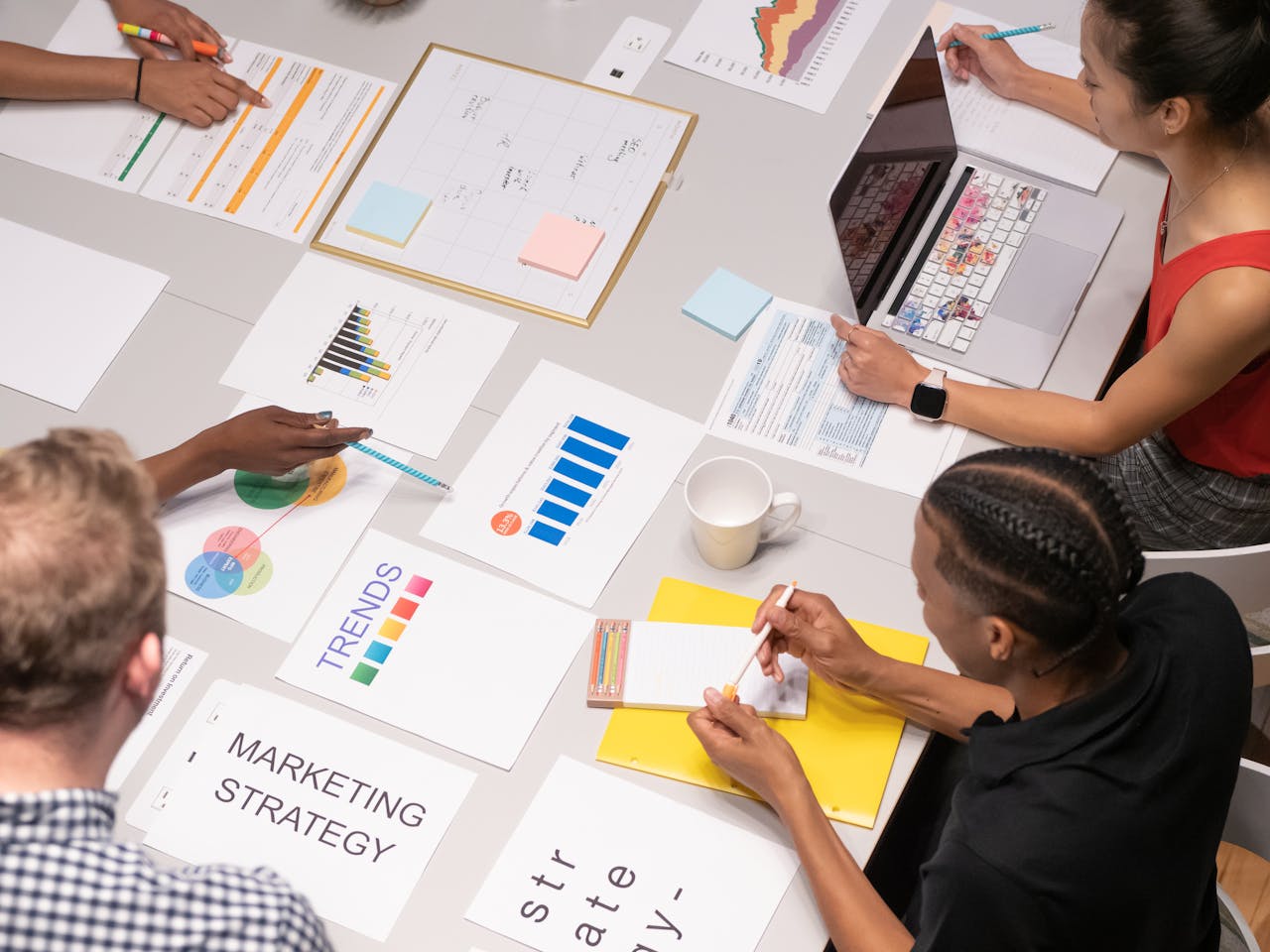
【45†embed_image】A cohesive strategy starts with planning the journey. Define your ICP and map content to funnel stages – then build measurement before scaling spend【7†L581-L590】【7†L615-L623】.
7. Video Content Strategy
- Steps: Produce a mix of video content aligned to channels: YouTube for long-form how-tos/case studies, LinkedIn for founder insights or webinars, TikTok/Reels for short brand tales or quick tips. Use affordable AI video tools (e.g. Synthesia, HeyGen) to generate content from scripts, or record talking-heads with smartphones. Repurpose snippets across platforms. Optimize video titles/descriptions with keywords. Include caption transcripts for accessibility and SEO.
- Expected Outcome: Boosted engagement, brand trust, and organic reach. Video content is now critical for discovery (YouTube is the #2 search engine). Videos on social can significantly increase follower growth.
- KPIs: View count, average watch time, subscriber/follower growth, video CTR (for ads or links), engagement (likes/shares). Track impact on brand lift if possible.
- Time to Impact: Medium (posting regularly takes 1–3 months to gain traction; compounding as library grows).
- Resources: Medium (production time or AI tool subscriptions). Tools: YouTube Studio (analytics), TikTok Creator tools, Canva/VEED.io for editing, AI video (Synthesia, Lumen5). Use Captioning tools for transcripts (StreamText, AI Gens).
- Case/Data: 91% of marketers include video in their 2026 strategy, as video consistently outperforms static media【7†L709-L718】. Short-form (Reels/Shorts) drives reach that text-only content cannot. According to HubSpot, video-first campaigns get ~4× the engagement of text-only【24†L212-L221】. Videos in email increase click-through by ~30%【7†L721-L726】.
8. Conversion Rate Optimization (CRO)
- Steps: Audit user experience on key landing pages. Use session-replay and heatmap tools to identify friction (Hotjar, Mouseflow). A/B test major elements: headlines, CTAs, form fields, images. Add trust signals (testimonials, badges). Simplify forms (progressive fields). Ensure mobile usability. Track results in GA4.
- Expected Outcome: Higher conversion rate on existing traffic, so every channel’s spend becomes more efficient. Improves ROI without extra ad spend.
- KPIs: Conversion rate (form fill, trial sign-up, purchase), bounce rate, pages/session, scroll depth. LTV can improve as better onboarding increases product use.
- Time to Impact: Medium (test cycles of 2–4 weeks each, expect 3+ iterations over 2–3 months).
- Resources: Low (many free or low-cost CRO tools). Tools: Google Optimize (free A/B testing), Optimizely, Unbounce (for landing pages), Hotjar (heatmaps), Google Analytics event tracking.
- Case/Data: Message-match landing pages (tailored headlines that echo the ad copy) consistently outperform generic pages【7†L693-L702】. Even a simple landing page targeted to an ad group can boost conversion by double digits. Many businesses see 10–30% higher CR just by aligning pages to ads.
【46†embed_image】Analytics dashboards (like GA4 cohort charts shown above) reveal which channels are truly driving leads and revenue – essential once campaigns are live.
9. CRM, Marketing Automation & First-Party Data
- Steps: Choose a CRM (HubSpot CRM, Salesforce, Zoho) and ensure all lead sources flow into it. Automate lead handoff to sales (e.g. notify reps of hot leads). Build out email/contact lists via lead magnets (ebooks, quizzes) to capture first-party data. Sync CRM with ads for retargeting (e.g. upload lead emails to Meta for custom audience). Use chatbots (ManyChat) to qualify visitors and feed CRM.
- Expected Outcome: Seamless lead nurturing and sales follow-up. First-party lists (email/WhatsApp) become invaluable assets as 3rd-party cookies fade. Better personalization and segmentation.
- KPIs: List growth (emails/contacts), lead-to-customer conversion, CRM data completeness (pipeline coverage), sales cycle length.
- Time to Impact: Short to medium (CRM setup in weeks, data usefulness grows over 2-3 months).
- Resources: Medium (CRM licensing, integration effort). Tools: HubSpot or Salesforce for CRM/marketing. Zapier or native integrations (Shopify, Ads). Analytics (Looker Studio). Chatbot tools: ManyChat, Drift.
- Case/Data: Operating CRM and marketing stacks as one system is critical【29†L100-L109】. Successful 2026 strategies “orchestrate discovery, personalization and conversion” across search, social, CTV and CRM【29†L108-L111】. First-party data assets (email lists, subscription IDs) are essential as ad targeting evolves【24†L223-L232】.
10. AI-Powered Personalization and Content
- Steps: Use AI tools strategically: apply ChatGPT or Google’s AI Overviews for research and outline generation【29†L79-L88】, then craft content and messaging with a distinct brand POV. Implement AI personalization on-site (e.g. dynamic product recommendations in Shopify, personalized banners). Deploy AI chatbots to answer FAQs instantly. Continue human review to ensure tone/accuracy.
- Expected Outcome: Faster content production and deeper personalization at scale. More precise targeting and adaptive experiences boost engagement.
- KPIs: Content output/time ratio, engagement (content shares, time on page), revenue lift from personalized offers, reduction in content creation cost.
- Time to Impact: Fast (AI tools are ready to use now); ongoing improvement cycle.
- Resources: Low–Medium (AI tools subscription costs, training). Tools: ChatGPT/GPT-4 (for ideation), Jasper or Copy.ai (content drafts), Personalization platforms (Dynamic Yield, Optimizely personalization), Google Analytics Intelligence for insights.
- Case/Data: 80% of marketers now use AI for content, and 75% for media production【11†L49-L58】. However, content without a human perspective is losing traction【11†L86-L94】. AI personalization can boost revenue 41% compared to static campaigns【8†L804-L812】. The key is feeding high-quality data into these tools and crafting unique, trust-building content that stands out【8†L804-L812】【29†L79-L88】.
Prioritized 90-Day Action Plan
The 90-day plan below lays out a sprint-by-sprint sequence to implement these tactics. In Month 1 focus on setup: define ICP, install GA4, set up CRM fields, and begin content planning. In Month 2 launch core channels (Google Ads, initial email flows, first blog posts) and conduct weekly optimization. In Month 3 analyze data to double-down on top performers and introduce new elements (e.g. a new social channel or Performance Max ads). Adjust each week based on metrics.
gantt
    title 90-Day Digital Marketing Action Plan
    dateFormat  YYYY-MM-DD
    section Month 1: Foundation
    Define ICP & Funnel     :done, 2026-05-01, 14d
    Setup GA4/CRM/UTMs      :done, 2026-05-05, 20d
    Content Calendar & SEO  :active, 2026-05-10, 20d
    section Month 2: Launch
    Launch Google Ads       : 2026-06-01, 30d
    Start Email Workflows   : 2026-06-05, 20d
    Publish Pillar Content  : 2026-06-10, 20d
    section Month 3: Optimize & Scale
    Analyze & Optimize      : 2026-07-01, 30d
    Add Paid Social Channel : 2026-07-10, 15d
Introduce Performance Max: 2026-07-15, 15d| Tactic | Expected ROI | Risk |
|---|---|---|
| ICP & Funnel Definition | Medium | Low |
| Analytics & Attribution | High | Low |
| Content Marketing & SEO | High (long-term) | Medium |
| Google Ads (Paid Search) | High | High (spend) |
| Paid Social Advertising | Medium | Medium |
| Email Marketing & Automation | High | Low |
| Video Content | Medium | Medium |
| Conversion Rate Optimization | High | Low |
| CRM/Automation (First-Party) | High | Low |
| AI-Personalization | High | Medium |
Table: Each tactic’s expected ROI and risk level. SEO/content and email often yield the highest ROI【8†L781-L789】【4†L563-L566】. Paid ads can drive quick revenue but require careful management (risk of wasted spend).
Conclusion
This Digital Marketing Strategy Guide 2026 offers a comprehensive, actionable blueprint for SMBs. By implementing these 10 tactics in order – starting with defining your customer and measurement systems – you create a strong foundation. Then execute high-ROI channels (paid search, SEO/content, email) while harnessing social and video for reach. Continuously test, analyze, and optimize each week. Use the 90-day plan and ROI comparison to prioritize efforts. With disciplined execution and modern tools (Google Ads, Meta, HubSpot, SEMrush, AI assistants, etc.), you’ll see faster lead growth and revenue. In a rapidly evolving landscape, focusing on data-driven channels and meaningful content (not just following every new trend) will give your business a durable advantage.
Sources: Authoritative guides and industry reports from 2024–2026【7†L678-L687】【8†L781-L789】【4†L553-L560】【24†L247-L256】 were used to validate all tactics and benchmarks.