


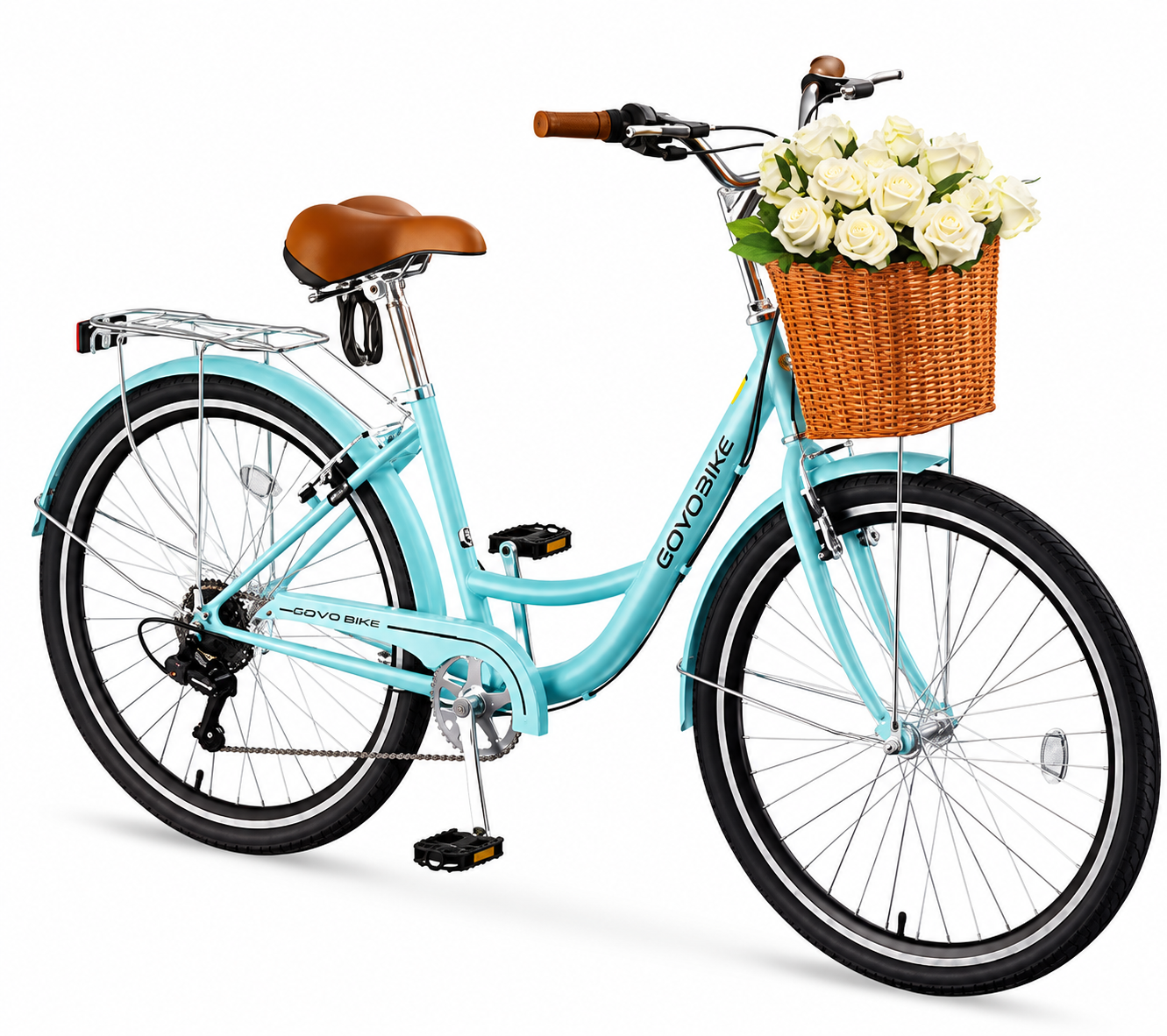
What is a cruiser bike and who is it for? Compare coaster brakes, single-speed setups, and specs, then learn how to choose the right cruiser for casual riding.
Introduction
A cruiser bike is a single-speed bicycle built around comfort rather than speed or efficiency — wide tires, a relaxed upright riding position, a wide saddle, and a coaster brake that stops the bike by pedaling backward. If you’re deciding whether a cruiser bike is right for you, it’s generally the best fit for short, casual rides on flat pavement, boardwalks, or beach paths, and a weaker fit for commuting long distances, riding in hilly areas, or any situation where multiple gears would help.

Cruiser bike: a single-speed, coaster-brake build with a hi-tensile steel frame and wide 26-inch wheels, designed for relaxed, casual, and beach riding.
What Is a Cruiser Bike?
A cruiser bike is a bicycle category defined primarily by its riding position and simplicity rather than performance specifications. It traces its design back to balloon-tire bicycles popularized in the U.S. in the early-to-mid 20th century, and it has kept the same core traits since: wide tires for a smooth, stable ride, a single gear to minimize mechanical complexity, and a frame geometry that puts the rider in a relaxed, feet-forward posture rather than leaning forward like a road or hybrid bicycle.
Unlike a hybrid bicycle, which borrows traits from road and mountain bikes to handle varied terrain, a cruiser bike isn’t designed for versatility — it’s designed specifically for comfort at low speed over short distances.
Key Characteristics & Components
The traits that most commonly define a cruiser bike include:
- Wide tires — typically wider than road or hybrid tires, absorbing bumps and providing stability at low speeds without needing suspension.
- Coaster brake — the classic cruiser braking method, where pedaling backward engages the rear brake; some cruiser models add a front hand brake as well.
- Single-speed drivetrain — no derailleur or gear shifting, keeping the mechanical system simple and low-maintenance.
- Steel frame — hi-tensile steel is the most common frame material in this category, prioritizing a smooth, dampened ride feel and durability over light weight.
- Wide, cushioned saddle and upright handlebars — positioning the rider in a relaxed, feet-forward posture rather than leaning over the handlebars.
- No suspension — the wide tires and frame flex of steel provide enough bump absorption for a cruiser bike’s intended low-speed, flat-terrain use.
Cruiser Bike Specs at a Glance
Key Dimensions & Components
| Spec | Cruiser Bike |
| Wheel Size | 26 inches |
| Brakes | Coaster Brake |
| Weight | 38–48 lbs |
| Frame Material | Hi-Tensile Steel |
| Speeds | Single-Speed |
| Suspension | Rigid (No Suspension) |
| Motor | N/A (Non-Electric) |
| Rider Level | Beginner |
| Specific Use | Casual & Beach Riding |
| Price Range | $200–$400 |
These figures represent a typical range across common cruiser bike models rather than a fixed specification — actual weight and price vary by manufacturer, frame size, and included features like fenders or a front basket.
Beach Cruiser Bike: The Most Common Variation
The beach cruiser bike is the variation most people picture when they think of this category, purpose-built for boardwalks and beach paths specifically.
Key Dimensions & Components
| Spec | Beach Cruiser Bike |
| Wheel Size | 26 x 2.125 inches |
| Brakes | Coaster Brake |
| Weight | 30–38 lbs |
| Frame Material | Hi-Tensile Steel |
| Speeds | 1-Speed (or 3-Speed) |
| Suspension | Rigid + Spring Saddle |
| Motor | N/A (Non-Electric) |
| Rider Level | Beginner & Casual |
| Specific Use | Boardwalk & Beach Paths |
| Price Range | $200–$600 |
The defining upgrade on a beach cruiser bike is the spring saddle, which adds a small amount of shock absorption at the seat rather than through suspension in the fork or frame — a simple, low-maintenance way to soften a ride over slightly uneven boardwalk or packed-sand surfaces. Some beach cruiser models also offer a 3-speed internal hub as an alternative to the pure single-speed setup, giving slightly more flexibility for gentle inclines near coastal paths without adding the maintenance complexity of a full derailleur system.
Cruiser Bike vs. Hybrid and Commuter Bicycles
This comparison matters because all three categories can look similar at a glance but serve different purposes.
| Factor | Cruiser Bike | Hybrid Bicycle | Commuter Bicycle |
| Gearing | Single-speed | 7–21 speed | 7–21 speed |
| Braking | Coaster brake | V-brake / disc | Mechanical disc |
| Weight | 38–48 lbs | 22–28 lbs | 24–28 lbs |
| Riding Position | Relaxed, feet-forward | Upright | Upright |
| Best For | Short, flat, casual rides | Mixed terrain commuting & fitness | Daily urban commuting |
| Price Range | $200–$400 | $350–$750 | $400–$800 |
The practical distinction: a hybrid bicycle or commuter bicycle is built to cover real commuting distances efficiently across varied terrain, while a cruiser bike is built to be comfortable and simple over short, flat distances — it’s a leisure bike first, not a transportation bike. Choosing a cruiser bike over a hybrid or commuter model generally makes sense when your rides are short, flat, and casual rather than a regular commute.
Benefits of a Cruiser Bike
- Comfortable, upright riding position — reduces strain on the back, neck, and wrists compared to a forward-leaning road or hybrid setup.
- Simple, low-maintenance mechanics — a single-speed drivetrain and coaster brake mean fewer components to adjust or replace over time.
- Stable, forgiving ride feel — wide tires and a relaxed geometry make a cruiser bike easy to handle at low speeds, including for less experienced riders.
- Lower cost of entry — the simplicity of a single-speed, coaster-brake design generally keeps cruiser bikes more affordable than geared bicycle types.
Limitations of a Cruiser Bike
- No gearing range — a single-speed drivetrain makes hills and inclines noticeably harder to pedal than on a geared bicycle.
- Heavier than most other bicycle types — steel frame construction and simple components add weight (38–48 lbs) compared to aluminum-framed categories of similar size.
- Not efficient for longer rides — the upright position and single gear increase effort over distance compared to a hybrid or road bicycle.
- Coaster-brake-only models limit control precision — some riders, especially those used to hand brakes, need an adjustment period to modulate stopping power smoothly with a coaster brake alone.
Who Should Choose a Cruiser Bike?
A cruiser bike is generally the right choice for:
- Riders who want a comfortable, low-effort bike for short, casual rides — around a neighborhood, along a boardwalk, or on flat bike paths.
- Beginners or infrequent riders who prioritize simplicity and ease of use over performance.
- Anyone wanting a beach- or resort-style bike specifically for flat coastal paths (best served by the beach cruiser variation).
- Riders who value low maintenance and mechanical simplicity over gearing flexibility.
A cruiser bike is generally not the right choice for regular commuting over real distance, riding in hilly terrain, or any use case where efficiency matters — a hybrid bicycle or commuter bicycle handles those situations more effectively.
Factors to Consider Before Buying a Cruiser Bike
Before comparing specific models, weigh these factors against how you actually plan to ride:
- Terrain — a cruiser bike performs best on flat pavement, boardwalks, or packed beach paths; hills and mixed terrain call for a geared bicycle instead.
- Riding distance — short, casual rides suit the single-speed design; regular rides over a few miles are more comfortable on a hybrid or commuter bicycle.
- Brake type — a pure coaster brake is simplest to maintain, while a coaster-plus-hand-brake combination offers more precise stopping control.
- Frame style and standover height — step-through frames make mounting and dismounting easier, which matters for casual, frequent on-and-off riding.
- Weight and portability — at 38–48 lbs, a cruiser bike is heavier than most other bicycle types; consider this if you’ll be lifting it onto a car rack or carrying it up stairs.
- Included accessories — fenders, a front basket, or a rear rack are common add-ons worth checking for if you plan to run errands or carry small items.
- Intended environment — a beach cruiser’s spring saddle and wider tires are worth the upgrade specifically for boardwalk or sand-adjacent riding; a standard cruiser bike is sufficient for neighborhood or park use.
- Budget — within the $200–$600 range, price differences generally reflect frame finishing, saddle quality, and included features rather than a fundamentally different design.
How to Choose the Right Cruiser Bike
- Confirm your terrain is flat. A cruiser bike’s single gear makes it a poor fit for hilly routes; flat pavement, boardwalks, and beach paths are the ideal use case.
- Decide between a standard and beach cruiser bike. If you’re riding primarily on boardwalks or packed sand, the beach cruiser’s spring saddle and wider tire sizing are worth the added comfort.
- Consider a 3-speed option if available. Some beach cruiser models offer a 3-speed hub, which can help with gentle inclines without adding significant maintenance complexity.
- Check brake preference. A pure coaster-brake model is simplest to maintain; if you want more precise stopping control, look for a cruiser bike that pairs a coaster brake with a front hand brake.
- Factor in weight if you’ll be carrying or storing the bike frequently. At 38–48 lbs, a cruiser bike is heavier than most other bicycle types, which matters if you’re lifting it onto a rack or up stairs regularly.
- Match your budget to frame and finish quality. Within the $200–$600 range, price differences generally reflect frame finishing, saddle quality, and included features like fenders or a basket rather than a fundamentally different design.
Understanding the Coaster Brake
A coaster brake is the defining mechanical feature of most cruiser bikes: pedaling backward engages an internal braking mechanism in the rear hub, stopping the bike without a hand lever. It’s mechanically simple, weatherproof (since the mechanism is sealed inside the hub), and requires little maintenance beyond occasional hub servicing. The trade-off is less precise modulation than a hand brake — new riders sometimes need a short adjustment period to get used to controlling speed through pedal position rather than hand pressure. Many cruiser bikes, particularly beach cruiser models, pair the coaster brake with a front hand brake specifically to give riders more stopping control when needed, without giving up the simplicity of the coaster brake as the primary system.
Regional Popularity: U.S., Canada, and Europe
The cruiser bike, particularly the beach cruiser style, is most strongly associated with U.S. coastal and resort culture, where it originated and remains widely available through both bike shops and general retailers. It’s also common in Canada in similar leisure and resort contexts. In much of Europe, the closest equivalent is often a traditional “city bike” or “Dutch-style” bike, which shares the upright riding position and relaxed geometry but more commonly includes a multi-speed internal hub and full fenders as standard, reflecting a greater emphasis on daily practical use over the U.S. cruiser’s leisure-first design. Buyers researching this category internationally should compare actual gearing and intended use rather than assuming a “cruiser bike” search term returns the same product globally.
Sizing & Fit
Cruiser bikes are frequently sold in a single frame size designed to fit a wide range of adult heights, unlike road or mountain bikes, which typically require choosing among multiple frame sizes. This is possible because the step-through or low-standover frame style common on cruiser bikes, combined with an adjustable seatpost and often an adjustable stem, accommodates height variation more easily than a performance-oriented frame geometry. When buying, check the manufacturer’s stated rider height range rather than assuming true universal fit, since some cruiser bikes are offered in more than one size for shorter or taller riders.
Maintenance Basics
A cruiser bike’s maintenance needs are lower than most other bicycle types, but a few areas still need attention:
- Coaster brake hub service — while sealed and low-maintenance, the internal mechanism should be checked periodically by a bike shop, since it isn’t user-serviceable the way an external hand brake is.
- Tire pressure — wide cruiser tires run lower pressure than road or hybrid tires; check the sidewall for the manufacturer’s recommended range.
- Chain tension and lubrication — even without gears, the single-speed chain still needs periodic cleaning and lubrication to prevent premature wear.
- Frame and paint care — steel frames are durable but can be prone to rust if the paint or coating is chipped and left exposed, particularly relevant for beach cruiser bikes ridden near salt air and sand.
Safety Considerations
Because cruiser bikes are most often ridden in casual, low-speed settings like boardwalks, beach paths, and neighborhoods, safety needs are generally lighter than for road or commuter cycling — but basic precautions still apply. A properly fitted bicycle helmet is worth wearing even for casual rides, and a reliable bicycle lock is particularly important in beach and resort areas, where cruiser bikes are frequently left unattended in public spaces and are a common, easily resold theft target due to their popularity.
Frequently Asked Questions About Cruiser Bikes
What is a cruiser bike used for?
A cruiser bike is used for short, casual, low-effort rides on flat terrain — neighborhoods, boardwalks, beach paths, and resort areas — rather than commuting, fitness training, or off-road riding.
What’s the difference between a cruiser bike and a beach cruiser bike?
“Cruiser bike” is the broader category, while “beach cruiser bike” is a specific variation built with a spring saddle, wider 26 x 2.125-inch tires, and sometimes a 3-speed hub, optimized specifically for boardwalk and beach-path riding.
Do cruiser bikes have gears?
Most cruiser bikes are single-speed, though some beach cruiser models offer a 3-speed internal hub option for riders who want slightly more flexibility on gentle inclines without a full derailleur system.
Are cruiser bikes good for long rides or commuting?
Cruiser bikes are not well suited to long rides or regular commuting, since the single-speed drivetrain and heavier steel frame make them less efficient over distance or on hills compared to a hybrid or commuter bicycle.
How does a coaster brake work on a cruiser bike?
A coaster brake engages when the rider pedals backward, activating an internal braking mechanism sealed inside the rear hub — it requires no hand lever, is largely weatherproof, and needs minimal maintenance compared to external brake systems.
How much does a cruiser bike cost?
A standard cruiser bike typically costs $200–$400, while a beach cruiser bike with features like a spring saddle or an optional 3-speed hub runs $200–$600.
Related Guides
- Bicycle Types — Compare the cruiser bike against all major bicycle types.
- Beach Cruiser Bike — The boardwalk- and beach-path-focused variation of the standard cruiser bike.
- Hybrid Bicycle — A geared, more versatile alternative for mixed terrain.
- Commuter Bicycle — A better fit for daily urban commuting than a cruiser bike.
- Basic Bicycle Maintenance — A general maintenance routine to keep your cruiser bike running smoothly.
- Bicycle Safety & Security — Helmets and locks recommended for casual cruiser bike rides.