


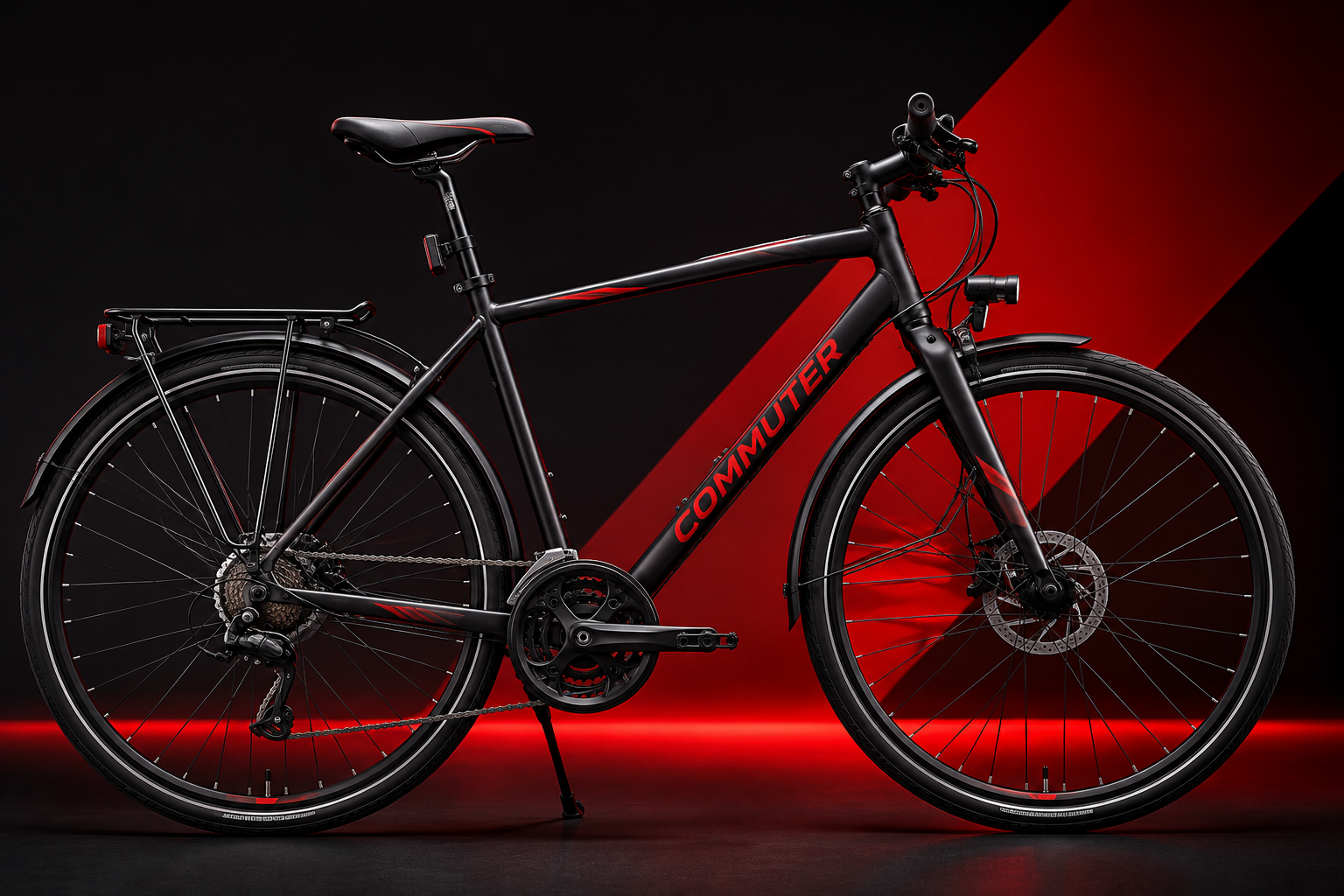
Introduction
A commuter bicycle has one job: get you to work, school, or wherever you need to be, day after day, without drama. So is it the right bike for you? If most of your riding is on pavement, in traffic or bike lanes, on a route you’ll be repeating over and over, yes — this is probably your bike. If you’re more interested in fitness training, off-road riding, or covering long recreational distances, you’ll be happier on a road bicycle or mountain bike instead.
What Is a Commuter Bicycle?
Unlike a folding bike or a fat tire bike, there’s no single dramatic feature that defines a commuter bicycle. It’s really more of a practical bundle of choices, all pointed at daily reliability — an upright riding position so you’re visible and comfortable in traffic, disc brakes that keep working consistently no matter the weather, and enough gear range to handle a real commute without needing to be a specialist bike for hills or speed.
Worth addressing early: a commuter bicycle overlaps a lot with a hybrid bicycle. They share a lot of the same DNA — similar geometry, similar gearing. Where they tend to differ is intent. A commuter bicycle is built and marketed specifically around the daily ride to work, often with rack or fender mounts already built in. A hybrid bicycle is framed a bit more broadly, as a do-it-all bike for commuting and leisure riding alike.
Key Characteristics & Components
A few things show up consistently on commuter bicycles:
- 700c wheels — the same size you’d find on a road bicycle, which rolls efficiently on pavement.
- Mechanical disc brakes — solid, consistent stopping power in wet or rainy commuting conditions, without the extra cost of a hydraulic system.
- A wide gear range — usually 7 to 21 speeds, enough to get you up moderate hills on a regular commute without needing anything specialized.
- No suspension — commuting is mostly a pavement thing, so suspension adds weight and cost without much real benefit.
- Aluminum frame — 6061 aluminum alloy is the standard here, a solid balance of weight, durability, and cost for daily use.
- Upright riding position — better visibility in traffic and a lot less strain than a road bike’s more aggressive, hunched-forward posture.
Commuter Bicycle Specs at a Glance
Key Dimensions & Components
| Spec | Commuter Bicycle |
| Wheel Size | 700c |
| Brakes | Mechanical Disc |
| Weight | 24–28 lbs |
| Frame Material | 6061 Aluminum Alloy |
| Speeds | 7-Speed / 21-Speed |
| Suspension | Rigid (No Suspension) |
| Motor | N/A (Non-Electric) |
| Rider Level | Beginner & Intermediate |
| Specific Use | Daily Urban Commuting |
| Price Range | $400–$800 |
Take these as a general range, not a fixed spec — actual weight, gearing, and price will shift depending on the manufacturer, what accessories come included (racks, fenders, lights), and component quality.
Commuter Bicycle vs. Hybrid, Road, and Folding Bikes
This is usually where people get stuck, since a commuter bicycle overlaps with several nearby categories.
| Factor | Commuter Bicycle | Hybrid Bicycle | Road Bicycle | Folding Bike |
| Wheel Size | 700c | 700c | 700c | 20 inches |
| Brakes | Mechanical Disc | V-Brakes / Disc | Rim / Disc | V-Brakes / Disc |
| Weight | 24–28 lbs | 22–28 lbs | 18–24 lbs | 22–28 lbs |
| Best For | Daily urban commuting | Urban commuting & leisure | Road racing & speed | Urban commuting & storage |
| Price Range | $400–$800 | $350–$750 | $400–$900 | $250–$600 |
A road bicycle will get you there faster, sure, but its narrow tires, lack of accessory mounts, and aggressive position make it a rougher fit for stop-and-go traffic or hauling a bag every day. A folding bike is solving a totally different problem — storage and getting on and off transit — and trades off wheel size and efficiency to do it. And against a hybrid bicycle? Honestly, the two overlap enough that the “right” pick often just comes down to which specific model has the features — rack mounts, fender compatibility, disc brakes — that actually match your commute.
Benefits of a Commuter Bicycle
- Built for reliability, not speed — disc brakes, a durable frame, and moderate gearing, all chosen for consistency day after day rather than winning any races.
- Comfortable in traffic — the upright position means better visibility and a lot less neck and back strain than you’d get hunched over a road bike.
- Brakes that work in the rain — mechanical disc brakes hold up noticeably better than rim brakes when it’s wet, which matters if your commute doesn’t take weather days off.
- Easy to load up with gear — a lot of commuter bicycles come with rack and fender mounts already in mind, which makes adding cargo capacity a lot easier than on a road-focused bike.
Limitations of a Commuter Bicycle
- It’s not fast — a road bicycle will beat it every time over the same paved distance, thanks to lighter weight and a more aerodynamic position.
- Not built for dirt — this is strictly a pavement bike; take it off-road, and it won’t perform anywhere near what a mountain bike would.
- A bit heavier than a road bike — 24–28 lbs versus a road bike’s 18–24 lbs, though that’s really the trade-off you’re making for durability and comfort.
- Shopping gets confusing — because commuter and hybrid bicycles overlap so much, you can easily end up comparing two nearly identical bikes marketed under different names.
Who Should Choose a Commuter Bicycle?
This is probably the right bike if:
- You’ve got a regular, repeatable route to work, school, or transit, where being reliable matters more than being fast.
- You want to carry a bag, groceries, or gear regularly, and you’d rather the bike already had rack and fender mounts than bolt them on yourself.
- You’re a beginner or intermediate rider who’d rather sit upright than hunch over like you would on a road bike.
- Your commute happens in all kinds of weather, and you want brakes you can actually trust when it’s raining.
It’s probably not the right call if speed is your priority (go with a road bicycle instead), you need to ride off-road, or you’re tight on storage space or hopping on transit regularly (a folding bike handles that better).
Factors to Consider Before Buying a Commuter Bicycle
Before you start comparing actual models, think through these against your real commute:
- How far, and how hilly? A short flat commute needs different gearing than a longer route with hills — check the gear range against what you’ll actually ride.
- What’s the weather like? If you’re riding in rain a lot, prioritize disc brakes and check whether fenders come included or are easy to add.
- What are you carrying? If you’re hauling a laptop, groceries, or gear, confirm the frame actually has rack or pannier mounts — don’t just assume.
- How’s the traffic on your route? Busier roads make the visibility of an upright position and predictable braking matter more.
- Where will you store it, on both ends? Secure parking at work and at home affects not just which bike you choose, but what security gear you’ll need too.
- What’s your budget actually buying you? In the $400–$800 range, you’re mostly paying for component quality and included accessories, not a fundamentally different bike.
- Is this really different from a hybrid? Don’t take the “commuter” label at face value — compare the actual spec sheet.
How to Choose the Right Commuter Bicycle
- Map out your actual commute first. Distance, hills, and traffic should drive your gearing and brake choices more than any single spec on a listing.
- Go with disc brakes if you ride in rain. Mechanical discs give you meaningfully more consistent stopping power than rim brakes when it’s wet.
- Check for rack and fender mounts if you’re carrying cargo or riding through rain regularly — much easier to confirm now than to retrofit later.
- Compare against similarly specced hybrid models. Since the categories overlap, look at the actual features — mounts, brake type, weight — not the label on the bike.
- Test the riding position if you can. Comfort matters a lot more on a bike you’ll ride every day than one you take out occasionally.
- Budget separately for accessories if needed. Lights, a lock, fenders — some of this might be included, some might not, so check what’s actually standard.
Sizing & Fit
Commuter bicycles are sized pretty much the same way as road and hybrid bikes, since they share similar 700c-wheel geometry. Because sizing charts differ between manufacturers, it’s worth checking the specific brand’s height-to-frame-size chart rather than assuming a size that fit you on one brand’s road bike will fit the same on a different brand’s commuter model. Since you’ll likely be riding this thing daily, getting the fit right actually matters more here than it would on a bike you only take out occasionally.
Maintenance Basics
Daily, all-weather use shapes what a commuter bicycle actually needs:
- Keep the chain and drivetrain clean. Road grime and rain both speed up wear, so cleaning and lubricating more often than you would on an occasional-use bike pays off.
- Check the brake pads periodically. Mechanical disc brakes wear down over time, especially with wet-weather use — don’t wait until you notice a performance drop.
- Check tire pressure often. Riding daily means pressure loss adds up faster than it would on a bike you ride a couple times a week — a quick check before you head out helps.
- Keep an eye on rack and fender hardware. If you’re using mounts, check periodically that the bolts are still tight — daily riding vibration loosens things over time.
Safety Considerations
Riding a commuter bicycle usually means regular time spent around vehicle traffic, so visibility and predictable stopping power matter more here than they would for casual or trail riding. A properly fitted bicycle helmet is just standard practice for daily commuting, and a reliable bicycle lock matters even more than usual, since your bike is probably sitting in public for hours during the workday.
Conclusion
A commuter bicycle doesn’t earn its category through one standout feature — it’s the combination of disc brakes, comfortable geometry, and moderate gearing, all chosen specifically for riding the same route, day after day, in whatever weather shows up. If what you want is a reliable, comfortable way to get to work or school on pavement, this is exactly what it’s built for. If speed, off-road terrain, or storage constraints matter more to you, you’ll be better off with a road bicycle, mountain bike, or folding bike instead.
Frequently Asked Questions About Commuter Bicycles
What is a commuter bicycle used for?
Mainly daily transportation — getting to work, school, or transit on regular, repeatable rides where reliability and comfort matter more than speed.
What’s the difference between a commuter bicycle and a hybrid bicycle?
The two overlap a lot. The main difference tends to be that commuter bicycles are more likely to come with rack and fender mounts built in, since they’re designed specifically around the daily commute rather than broader mixed-terrain versatility.
Is a commuter bicycle good for long distances?
It can handle moderate distances fine, but for consistently long rides, a road bicycle’s lighter weight and more efficient geometry will get you there faster and less tired.
Do commuter bicycles come with lights or racks included?
Depends on the model. Some come with rack or fender mounts standard, while lights and other accessories are often sold separately — worth checking the specific listing rather than assuming.
How much does a commuter bicycle cost?
Typically $400–$800, with the price difference mostly coming down to component quality and included accessories rather than a fundamentally different bike.
Are disc brakes necessary on a commuter bicycle?
Not strictly, but mechanical disc brakes give you noticeably more consistent stopping power in wet weather than rim brakes — worth it if your commute doesn’t stop for rain.
Related Guides
- Bicycle Types — Compare the commuter bicycle against all major bicycle types.
- Hybrid Bicycle — The closest overlapping category, worth comparing spec by spec.
- Road Bicycle — A faster option if speed matters more than daily practicality.
- Folding Bike — A better fit if storage or multimodal transit is your priority.
- Basic Bicycle Maintenance — A general maintenance routine to complement daily-commute-specific care.
- Bicycle Safety & Security — Helmets and locks recommended for daily commuting.