


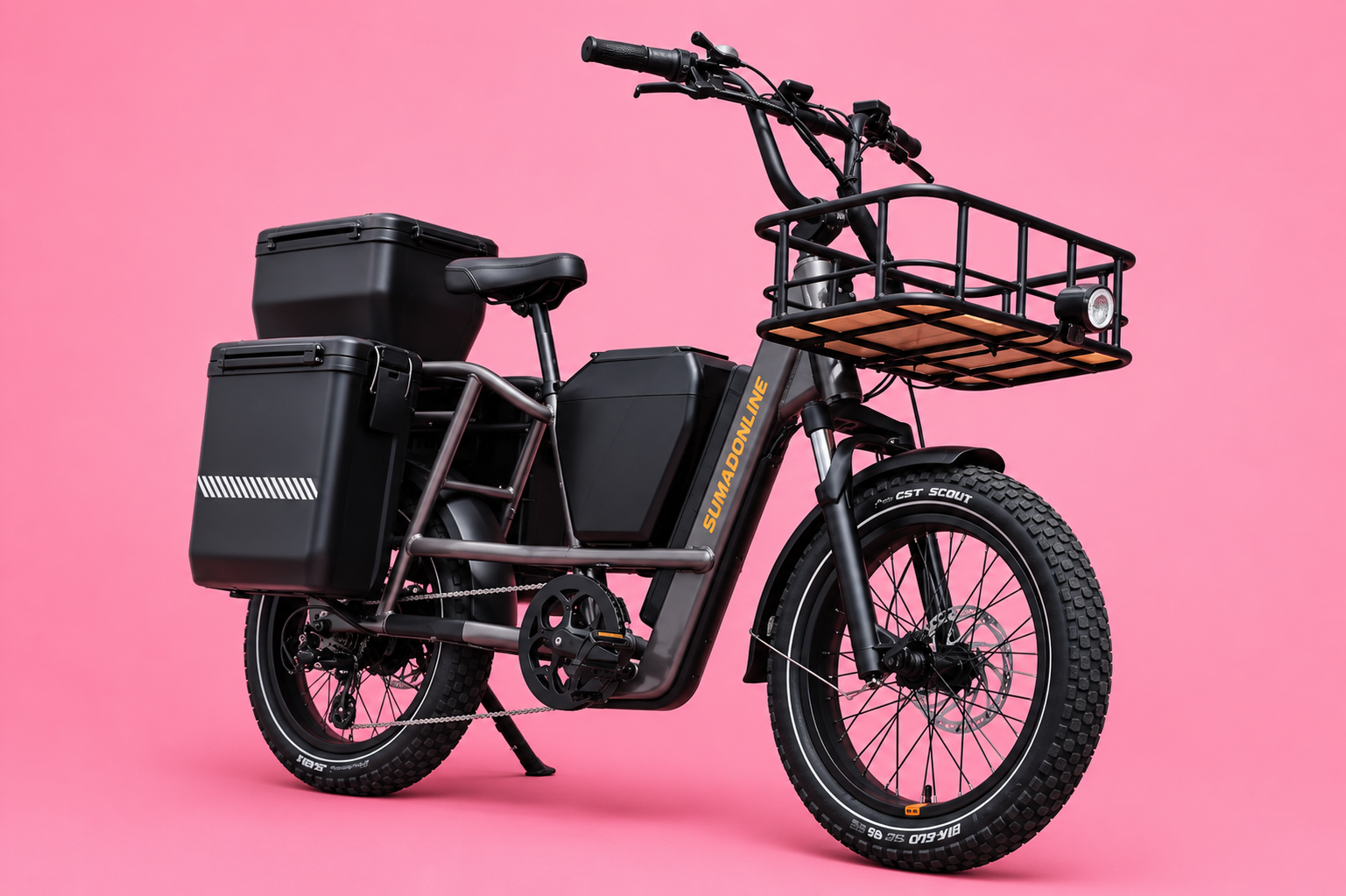
Introduction
A cargo electric bicycle is what happens when you take a standard electric bicycle and build it specifically to haul weight — kids, groceries, work gear, whatever you need to move — without losing the pedal-assist power that makes an e-bike practical in the first place. So is it the right bike for you? If you’re regularly moving people or cargo by bike — school drop-offs, grocery runs, replacing short car trips — this is very likely your bike. If you want a comfortable commute without much load-carrying, the standard electric bicycle will serve you better and cost less.
What Is a Cargo Electric Bicycle?
Think of it as an electric bicycle that traded some of its speed and agility for load capacity and stability. Where a standard electric bicycle is tuned for a solo commuter getting to work efficiently, a cargo electric bicycle is built around a longer frame, a lower center of gravity, and a motor and battery sized to handle real weight — not just the rider, but whatever (or whoever) is riding along too.
The category exists because a regular electric bicycle, even a sturdy one, isn’t really built to carry a second passenger safely or hold a week’s worth of groceries without the geometry and components starting to struggle. A cargo electric bicycle solves that specific problem, and it’s become common enough now that it’s really its own thing rather than just “an e-bike with a rack bolted on.”
Key Characteristics & Components
A few things set a cargo electric bicycle apart from the standard electric bicycle platform it’s built from:
- Smaller, wider wheels — typically 20 x 4.0 inches, a deliberate trade-off that lowers the center of gravity and improves stability when the bike is loaded.
- Hydraulic disc brakes — given the extra weight involved — offer stronger, more consistent braking than the standard electric bicycle’s disc setup, making them a practical necessity rather than a luxury upgrade.
- A longer, reinforced frame — built specifically to support cargo racks, child seats, or panniers without flexing under load.
- The same 500W–750W motor class as the standard electric bicycle — but doing more work, since it’s moving more total weight.
- Rigid or front suspension — some cargo electric bicycles skip suspension for simplicity and lower cost; others include front suspension to smooth out the ride when loaded.
- Aluminum frame — 6061 aluminum alloy remains the standard material choice, balancing strength with a weight that’s already higher than most other bicycle types.
Cargo Electric Bicycle Specs at a Glance
Key Dimensions & Components
| Spec | Cargo Electric Bicycle |
| Wheel Size | 20 x 4.0 inches |
| Brakes | Hydraulic Disc |
| Weight | 65–80 lbs |
| Frame Material | 6061 Aluminum Alloy |
| Speeds | 7-Speed (Shimano) |
| Suspension | Rigid / Front Suspension |
| Motor & Battery Range | 500W–750W motor / 30–60 miles |
| Rider Level | Beginner & Intermediate |
| Specific Use | Family Transport & Cargo |
| Price Range | $1,500–$3,000 |
Take these as a general range rather than a fixed spec — actual weight, battery range, and price shift depending on the manufacturer, the size of the battery pack, and what cargo accessories (child seats, rack extensions) come included versus sold separately.
Cargo Electric Bicycle vs. Standard Electric Bicycle
This is the comparison most people actually need, since a cargo electric bicycle is a direct variation on the standard platform rather than an unrelated category.
| Factor | Cargo Electric Bicycle | Standard Electric Bicycle |
| Wheel Size | 20 x 4.0 inches | 26–27.5 inches |
| Brakes | Hydraulic Disc | Disc |
| Weight | 65–80 lbs | 45–60 lbs |
| Battery Range | 30–60 miles | 40–60 miles |
| Best For | Family transport & cargo | City commuting |
| Price Range | $1,500–$3,000 | $800–$1,500 |
The gap that jumps out is weight and range. A cargo electric bicycle is roughly 20–30 lbs heavier than the standard model, and its battery range dips a bit at the low end (30 miles versus 40) simply because the motor is working harder to move all that extra weight. That’s the trade-off you’re making — more capability to carry people and cargo, in exchange for a heavier bike and somewhat reduced range on a single charge, especially when loaded.
Benefits of a Cargo Electric Bicycle
- Genuinely replaces car trips — school runs, grocery hauls, and errands that would otherwise mean getting in the car become realistic on two wheels.
- Stable even when loaded — the wider tires and lower center of gravity keep the bike planted in a way a standard electric bicycle with an aftermarket rack just isn’t.
- Strong braking margin — hydraulic disc brakes are sized for a heavier, loaded bike, so stopping power doesn’t feel like an afterthought.
- One bike does double duty — commuting, errands, and family transport, without needing a separate vehicle or trailer setup for most trips.
Limitations of a Cargo Electric Bicycle
- It’s heavy — 65–80 lbs is a lot of bike, and that matters if you ever need to lift it, maneuver it into tight storage, or carry it up steps.
- Reduced range when loaded — the 30–60 mile range reflects real-world variability more than a standard electric bicycle does, since cargo weight has a bigger effect on how far the battery gets you.
- Higher upfront cost — at $1,500–$3,000, it’s a meaningfully bigger investment than the standard electric bicycle’s $800–$1,500.
- Needs more storage space — the longer frame doesn’t fit into the same tight spaces a standard bike would, so confirm you actually have room for it before buying.
Who Should Choose a Cargo Electric Bicycle?
This is probably the right bike if:
- You’re doing regular school drop-offs or need to transport kids by bike.
- Grocery runs or errands are a recurring part of your week, and you’d rather not rely on a car for them.
- You want to replace short car trips generally, not just commute solo to work.
- You have the storage space and, ideally, secure parking for a bike that’s noticeably bigger and heavier than a standard model.
It’s probably not the right call if you’re mainly commuting solo without much cargo — the standard electric bicycle will be lighter, cheaper, and easier to store, without giving up much you’d actually use.
Factors to Consider Before Buying a Cargo Electric Bicycle
Before comparing specific models, think through these:
- What are you actually hauling? Kids need a proper child seat and safety harness setup, not just a flat cargo deck — confirm the model supports what you need.
- How far is your typical loaded trip? Battery range drops with weight, so check real-world range estimates for a loaded bike, not just the unloaded spec.
- Where will you store and charge it? At 65–80 lbs and with a longer frame, this bike needs more space than a standard electric bicycle — plan for that before buying.
- What’s your budget actually covering? In the $1,500–$3,000 range, price differences often come down to battery capacity, included cargo accessories, and component quality.
- Do you need front suspension? If your routes include rough pavement or curbs, front suspension smooths that out; if your riding is on smooth, well-maintained streets, a rigid setup keeps cost and weight down.
- How will you secure it? A cargo electric bicycle is a high-value target for theft — factor in a serious lock as part of your total budget, not an afterthought.
How to Choose the Right Cargo Electric Bicycle
- Confirm cargo or child-carrying capacity first. Not every model handles kids and groceries equally well — check weight limits and included safety features before anything else.
- Check real-world loaded range, not just the spec sheet number. A 30–60 mile range is wide; ask what conditions produce the lower end.
- Test ride it loaded if at all possible. A cargo electric bicycle handles very differently once weight is on board — an unloaded test ride won’t tell you much.
- Match motor power to your terrain. Hilly routes with regular cargo loads benefit from the higher end of the 500W–750W range.
- Budget for a proper lock and secure storage. Given the price point, security shouldn’t be an afterthought.
- Confirm your storage space can fit the longer frame before committing, since this isn’t something you can easily work around after buying.
Sizing & Fit
Sizing on a cargo electric bicycle works a bit differently than on a standard electric bicycle, since the frame geometry is built around load stability rather than rider height alone. Standover height and reach still matter, but manufacturers typically design these frames to fit a wider range of rider heights on a single size, given the practical reality that they’re often shared between household members. Still, checking the specific model’s rider height range is worth doing rather than assuming a one-size-fits-all approach applies universally.
Maintenance Basics
A cargo electric bicycle asks a bit more of its maintenance routine than the standard model, mostly because of the extra weight it carries:
- Battery care matters even more here — avoid fully draining it, and store it at moderate temperatures, since the battery is working harder to move more weight overall.
- Brake pad wear happens faster — hydraulic disc brakes on a loaded, heavier bike wear through pads more quickly than on a lighter, unloaded setup.
- Check tire pressure regularly — the wide tires need correct pressure to handle the higher total weight safely and predictably.
- Inspect the frame and cargo mounting points periodically, especially if you’re regularly loading and unloading kids or heavy cargo, since repeated stress adds up over time.
Safety Considerations
Because a cargo electric bicycle is often carrying passengers, not just cargo, safety gear matters more here than on most other bicycle types. A properly fitted bicycle helmet for both rider and any passengers is standard practice, and a serious bicycle lock is worth the investment given how attractive a $1,500–$3,000 bike is to thieves. It’s also worth looking into electric bicycle accessories built specifically for e-bike frames, since standard bicycle accessories don’t always fit or support the added weight properly.
Conclusion
A cargo electric bicycle isn’t a bigger, heavier electric bicycle for its own sake — it’s a purpose-built answer to a specific need: moving people and cargo by bike, reliably and safely, in place of short car trips. The trade-offs are real (more weight, less range when loaded, a higher price), but for the right use case — school runs, grocery hauls, replacing a second car — those trade-offs are exactly what you’re paying for. If your riding is mostly solo commuting without much to carry, stick with the standard electric bicycle instead.
Frequently Asked Questions About Cargo Electric Bicycles
What is a cargo electric bicycle used for?
Mainly hauling people and cargo by bike — school drop-offs, grocery runs, errands — in situations where a standard electric bicycle’s rack setup wouldn’t be stable or capable enough.
How much can a cargo electric bicycle carry?
Capacity varies by model and isn’t a fixed universal number, since it depends on frame design, motor power, and manufacturer specifications — always check the specific model’s stated weight limits rather than assuming.
Is a cargo electric bicycle heavier than a standard electric bicycle?
Yes, noticeably — a cargo electric bicycle typically weighs 65–80 lbs compared to a standard electric bicycle’s 45–60 lbs, largely due to the reinforced frame and wider wheels needed to carry weight safely.
How far can a cargo electric bicycle go on one charge?
Typically 30–60 miles, though the actual range depends heavily on how much cargo or passenger weight you’re carrying — a fully loaded bike will land toward the lower end of that range.
How much does a cargo electric bicycle cost?
Usually $1,500–$3,000, a meaningful step up from the standard electric bicycle’s $800–$1,500, reflecting the stronger frame, brakes, and cargo-specific components.
Can a cargo electric bicycle carry a child?
Many models are designed to, but this depends entirely on the specific bike having a proper child seat and safety harness setup — not every cargo electric bicycle includes this, so it’s worth confirming before assuming.
Related Guides
- Electric Bicycle — The standard platform this cargo variation is built from.
- Bicycle Types — Compare cargo electric bicycles against all major bicycle types.
- Electric Bicycle Accessories — Gear built specifically for e-bike frames and batteries.
- Electric Bicycle Maintenance — Keep the motor, battery, and drivetrain running well under extra load.
- Bicycle Safety & Security — Helmets and locks suited for a higher-value, passenger-carrying e-bike.