


Introduction
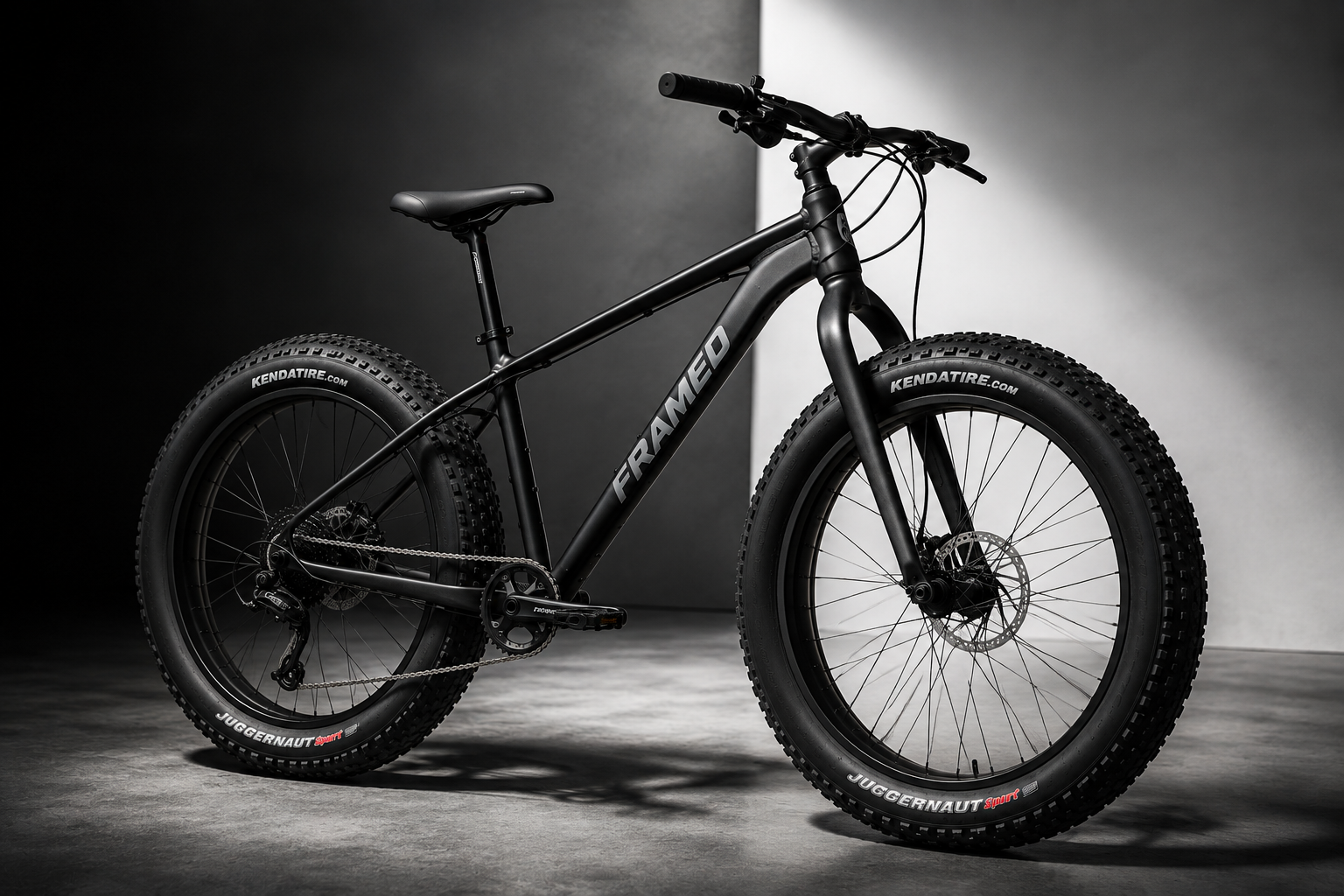
Picture a bicycle tire almost as wide as a car tire, and you’ve got the idea behind a fat-tire bike. These bikes run oversized tires — around 4 inches wide — built for surfaces that would stop a regular bike in its tracks: snow, loose sand, mud, anything soft or unstable underfoot. So is one worth getting? If snow, sand, or genuinely rough terrain are a real part of how you ride, yes, almost certainly. If most of your riding is on pavement or well-groomed trails, probably not — you’d mostly just be hauling around extra weight and rolling resistance for no real payoff.
What Is a Fat Tire Bike?
Everything about this category comes down to one feature: tires roughly 3.8-4.8 inches wide, compared to the 2–2.4-inch tires you’d find on a typical mountain bike. That extra width lets you run the tire at very low pressure, sometimes down in the single digits (PSI), without it folding under the rim. And that low pressure is really the whole trick — it lets the tire squash down and spread the bike’s weight over a much bigger footprint than a normal tire ever could.
That bigger footprint is what stops a fat tire bike from sinking into snow or sand the way a narrower, higher-pressure tire would. The whole category actually started with winter and beach riders who needed something a standard mountain bike simply couldn’t do, and it’s since grown into more of an all-purpose rough-terrain bike.
Key Characteristics & Components
A few things tend to show up on almost every fat tire bike:
- Oversized tires — usually around 26 x 4.0 inches, though exact width and wheel diameter shift a bit from brand to brand.
- Wide rims — a normal mountain bike rim just isn’t built to support a tire this wide at this low a pressure.
- Mechanical disc brakes — solid, dependable stopping power in the wet, gritty, and generally messy conditions these bikes get ridden in.
- No suspension — the tire itself does most of the bump-absorbing work, which is part of why most fat tire bikes skip a suspension fork altogether.
- Aluminum frame — 6061 aluminum alloy shows up most often here, striking a reasonable balance of weight, cost, and durability.
- A wide gear range — commonly 7 to 21 speeds, since pedaling a wide, heavy tire takes noticeably more effort than a standard one.
Fat Tire Bike Specs at a Glance
Key Dimensions & Components
| Spec | Fat Tire Bike |
| Wheel Size | 26 x 4.0 inches |
| Brakes | Mechanical Disc |
| Weight | 32–42 lbs |
| Frame Material | 6061 Aluminum Alloy |
| Speeds | 7-Speed / 21-Speed |
| Suspension | Rigid (No Suspension) |
| Motor | N/A (Non-Electric) |
| Rider Level | Beginner & Intermediate |
| Specific Use | Snow, Sand & Rough Trails |
| Price Range | $400–$800 |
Treat these as a general ballpark rather than gospel — actual weight, gearing, and price move around depending on the brand, tire width, and component quality. A few manufacturers also sell electric-assist versions, but the numbers above describe the standard, non-motorized setup most people picture.
How Fat Tire Bikes Actually Float on Snow and Sand
This isn’t marketing fluff — it’s just physics. A normal bike tire runs fairly high pressure (60–100 PSI or more) in a narrow tire, which means the bike’s weight gets concentrated onto a small patch of ground. A fat tire, on the other hand, can run as low as 5–10 PSI because there’s so much more volume in the tire to support your weight even at that low a pressure.
Run it that soft and the tire flattens out slightly against whatever you’re riding on, spreading your weight across a much wider, longer patch of contact. On snow or sand, that’s the difference between the tire sinking in and stalling versus rolling right over the top. It also means tire pressure isn’t a set-it-and-forget-it thing on a fat tire bike the way it often is elsewhere — dial it in for the surface you’re actually riding, and it changes how the bike handles noticeably.
Fat Tire Bike vs. Mountain Bike vs. Cruiser Bike
Worth knowing where a fat tire bike sits next to the two categories people most often mix it up with:
| Factor | Fat Tire Bike | Mountain Bike | Cruiser Bike |
| Tire Width | ~4.0 inches | ~2.2–2.4 inches | ~2.1 inches |
| Suspension | Rigid | Front or full | Rigid |
| Best Terrain | Snow, sand, loose/rough surfaces | Dirt trails, technical terrain | Flat pavement, casual paths |
| Typical Weight | 32–42 lbs | 30–37 lbs | 38–48 lbs |
| Gearing | 7–21 speed | 21-speed | Single-speed |
| Price Range | $400–$800 | $350–$800 | $200–$400 |
A mountain bike leans on suspension and moderate-width tires to handle rocky, technical terrain quickly — a fat tire bike gives up that agility in exchange for flotation on the kind of loose, unstable ground a mountain bike’s tires would simply dig into. Next to a cruiser bike, there’s a shared simplicity — no suspension, easygoing geometry — but a cruiser is built for the boardwalk, not the dune.
Benefits of a Fat Tire Bike
- Goes where other bikes can’t — snow, sand, and mud stop being obstacles you walk the bike through.
- Feels stable and forgiving — that wide footprint makes for a confident, planted ride, especially at lower speeds.
- Nothing to service in the suspension — the tire itself absorbs a lot of the rough stuff, so there’s no fork internals to maintain.
- Extends your riding season — if you’re somewhere that gets real winters, this is often the difference between riding year-round and putting the bike away in November.
Limitations of a Fat Tire Bike
- It’s heavy — 32–42 lbs is a real number to feel, especially compared to a mountain or hybrid bike of similar size.
- Pavement is its weak spot — the same low pressure that gives you flotation on snow makes the bike noticeably harder to pedal on hard, smooth ground.
- Tire pressure takes more thought — you can’t just set it once and forget it; the right pressure shifts with the surface.
- Not as nimble on technical trails — a mountain bike will out-maneuver it on fast, rocky singletrack every time.
Who Should Choose a Fat Tire Bike?
This one’s probably right for you if:
- You live somewhere with real winters and want to keep riding through the snow.
- You’re near a beach or dunes and need traction sand just won’t give a normal tire.
- Your regular routes involve loose, muddy, or unstable ground where staying on top of the surface matters more than technical maneuvering.
- You’re newer to riding and want something forgiving — the wide tire footprint is genuinely more tolerant of mistakes at low speed.
It’s probably not the right call if you’re commuting mostly on pavement (a hybrid bicycle or road bicycle will get you there with a lot less effort) or if you’re chasing fast, technical singletrack (that’s a job for a mountain bike).
Factors to Consider Before Buying a Fat Tire Bike
Before you start comparing actual models, it helps to think through a few things first:
- What surface will you mostly ride? Snow and sand call for the widest tires and lowest pressure ranges; general rough terrain gives you a bit more flexibility.
- How serious is your winter riding? Not every fat tire bike is built and tested the same way for cold-weather conditions — worth confirming rather than assuming.
- What do you need from the brakes? Mechanical disc brakes are the norm and generally solid, but if you’re riding in consistently wet or freezing conditions, it’s worth comparing performance across brands.
- Can you handle the weight? At 32–42 lbs, this isn’t a bike you’ll want to carry up three flights of stairs regularly — factor that into where you’ll store and transport it.
- How’s the terrain where you ride, elevation-wise? Wider gear ranges help offset the extra pedaling effort, especially if hills are part of the picture.
- Do you want electric assist? Some models offer it to help with that added rolling resistance — just make sure it’s an actual, distinct model rather than something you’re assuming is included.
- What’s your budget telling you? In the $400–$800 range, the differences you’re paying for are mostly in component quality and frame finishing, not a completely different bike underneath.
How to Choose the Right Fat Tire Bike
- Start with your dominant surface. If it’s mostly snow or sand, go wide on the tires. If it’s more general rough terrain, you’ve got more room to choose.
- Look at the tire’s recommended pressure range. Make sure the low end actually gets you the flotation you need.
- Match gearing to elevation. Flat areas don’t need as wide a range as hilly ones — remember, wide tires already take more effort to turn over.
- Decide how you feel about suspension. Most fat tire bikes are rigid by design; if you want front suspension too, don’t assume it’s there — check.
- Think about where you’ll actually keep it. These bikes are bulkier and heavier than most, so make sure your storage and rack setup can handle that.
- Put your money into components, not just tire width. Brakes and drivetrain quality matter more here than you’d think, given how hard these conditions are on parts.
Sizing & Fit
Sizing works pretty similarly to a mountain bike, since the riding position is broadly the same — upright, athletic. One thing worth noting: standover height tends to run a touch higher than an equivalent mountain bike simply because the tires themselves are bigger. If you’re between two sizes, that’s worth checking against the actual geometry chart rather than guessing. And since sizing isn’t standardized across brands, always check the specific model’s chart instead of assuming.
Maintenance Basics
Most of this is standard bike care, with a handful of things that matter more here:
- Adjust tire pressure for conditions. This matters more on a fat tire bike than almost anywhere else — don’t just set one PSI and leave it.
- Clean the drivetrain after wet or gritty rides. Snow, sand, and mud all get into the chain and cassette more than dry pavement ever would.
- Check the rims and spokes periodically. Wider rims and low-pressure riding put a bit more stress here than you’d see on a standard wheel.
- Watch the brakes in cold or wet weather. Mechanical discs can be affected by moisture and temperature swings, so check cables and pads more often if you’re riding through winter.
Safety Considerations
These bikes tend to get ridden in places that are more remote or seasonally sketchy — snowy trails, beaches, backcountry paths — where being prepared and visible matters more than it does on a typical bike path. A properly fitted bicycle helmet is worth wearing no matter the terrain, and a decent bicycle lock is still worth carrying even when you’re stopping somewhere that feels quiet and out of the way.
Conclusion
At the end of the day, a fat tire bike solves one very specific problem — floating over snow, sand, and unstable ground — and it does it through tire volume and low pressure, nothing fancier than that. The trade-off is real, though: it’s fantastic where a narrow tire would sink or slip, and a bit of a compromise everywhere else. If snow, sand, or genuinely unstable terrain are a real, recurring part of how you ride, it’s worth it. If your riding is mostly dirt trails or pavement, you’ll be better served by a mountain bike or a hybrid.
Frequently Asked Questions About Fat Tire Bikes
What is a fat tire bike used for?
Mainly for riding on snow, sand, mud, and other loose or unstable surfaces where a normal tire would sink in or lose traction — the wide, low-pressure tires spread your weight over a much bigger contact patch.
Are fat tire bikes good for regular pavement riding?
You can ride one on pavement, but it won’t feel great — the same low pressure that gives you traction on snow or sand creates a lot more rolling resistance, so a hybrid, commuter, or road bike will get you there with far less effort.
What tire pressure should a fat tire bike run?
Usually much lower than a standard bike — often in the single digits up to the low teens (PSI) — with the exact number depending on the surface, your weight, and what the tire manufacturer recommends.
Is a fat tire bike heavier than a mountain bike?
Generally, yes. The wider tires, wheels, and reinforced parts usually push total weight to somewhere around 32–42 lbs, a bit more than a comparable hardtail mountain bike’s 30–37 lbs.
Can a fat tire bike replace a mountain bike?
Not really — it can handle rough, loose ground just fine, but it doesn’t have the suspension or the quick handling of a dedicated mountain bike on fast, technical trails. Think of it as a different tool rather than a swap.
Do fat tire bikes come with suspension?
Most don’t — the tire volume and low pressure do the job suspension would normally handle. That said, some models do offer front suspension, so it’s worth checking rather than assuming either way.
How much does a fat tire bike cost?
A standard one typically runs $400–$800, with most of that price difference coming down to component quality — brakes, drivetrain — rather than a fundamentally different bike.
Related Guides
- Bicycle Types — Compare the fat tire bike against all major bicycle types.
- Mountain Bike — A more agile choice for technical dirt trails.
- Hybrid Bicycle — A more efficient option for mixed pavement and light-terrain commuting.
- Road Bicycle — The right choice if your riding is pavement-exclusive.
- Basic Bicycle Maintenance — A general maintenance routine to complement fat-tire-specific care.
- Bicycle Safety & Security — Helmets and locks recommended for winter, beach, or backcountry rides.