


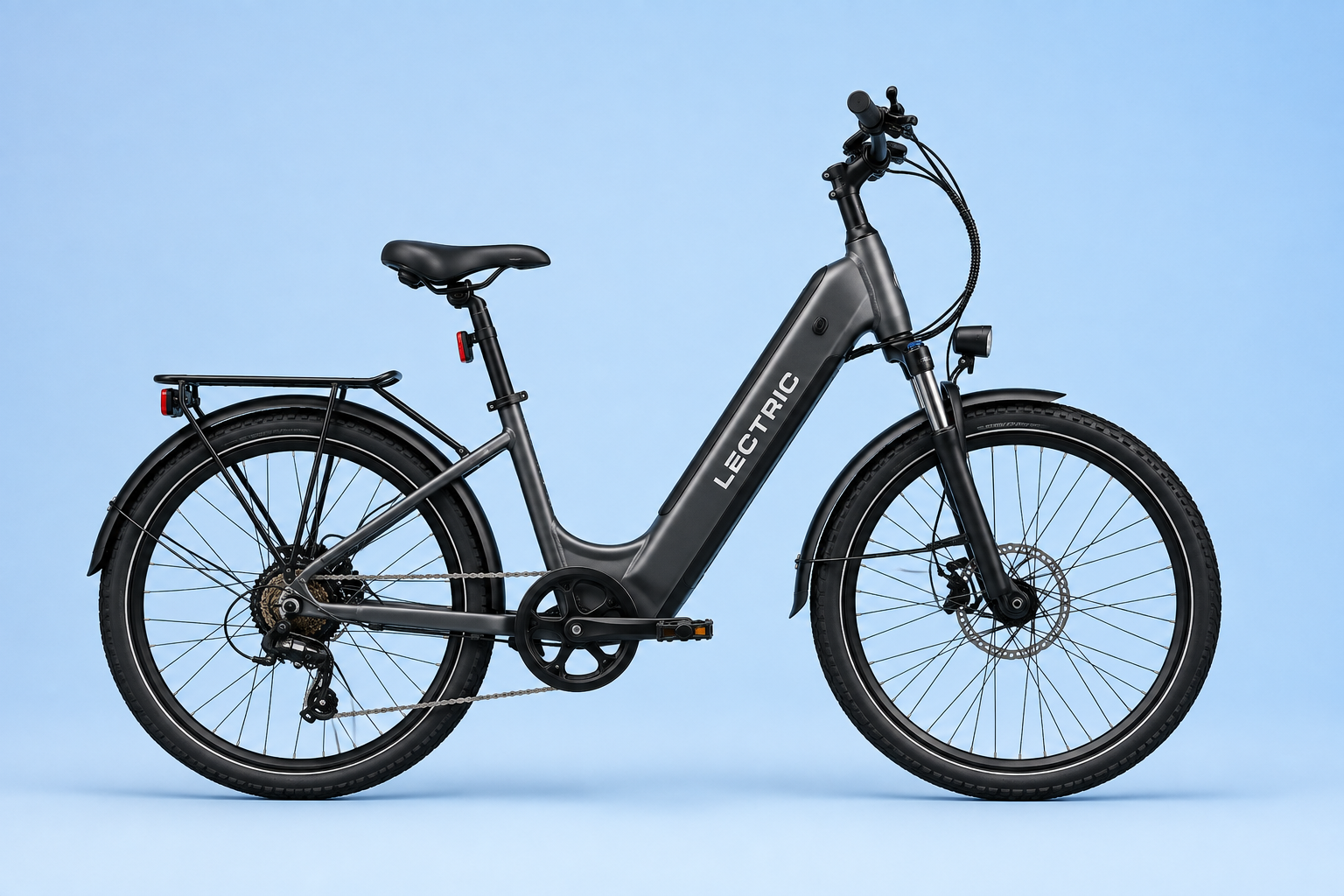
Electric bicycle: a pedal-assist commuter model with a 500W–750W hub motor, front suspension, and disc brakes, built for daily city riding.
Introduction
An electric bicycle pairs a traditional bike frame with a motor and battery, giving riders pedal-assisted power that reduces effort on hills, headwinds, and long commutes. As one of the fastest-growing categories among all bicycle types, the electric bicycle has become the go-to choice for commuters who want speed and range without the cost of a car. This guide covers everything about the electric bicycle — how the motor and battery work, the legal classes that apply, full specs, popular variations, and a complete buying framework.
 Alt text: electric bicycle for city commuting with front suspension and disc brakes
What Is an Electric Bicycle?
An electric bicycle (e-bike) is a bicycle equipped with an electric motor, a rechargeable battery, and a controller that delivers power either through pedal assist (the motor boosts your pedaling) or a throttle (the motor moves the bike without pedaling). Most electric bicycles sold today use pedal-assist systems, since throttle-only riding is restricted or classified differently in many regions.
How Electric Bicycle Motors Work
Electric bicycle motors come in two main placements:
- Hub Motors – Mounted in the front or rear wheel hub. These are simpler, more affordable, and common on entry-level electric bicycles.
- Mid-Drive Motors – Mounted at the crank, driving the chain directly. These offer better weight balance and stronger hill-climbing performance, typically found on higher-end electric bicycles.
How Electric Bicycle Batteries Work
Battery range on an electric bicycle depends on motor wattage, rider weight, terrain, assist level, and battery capacity (measured in watt-hours, Wh). A typical electric bicycle in the 500W–750W range delivers roughly 40–60 miles per charge under normal commuting conditions, with charging times generally between 4–6 hours.
Electric Bicycle Classes & Legal Considerations
Most regions that regulate electric bicycles use a three-class system:
- Class 1 – Pedal-assist only, motor cuts off at 20 mph.
- Class 2 – Pedal-assist plus throttle, motor cuts off at 20 mph.
- Class 3 – Pedal-assist only, motor cuts off at 28 mph, often requires a helmet.
Rules vary by country, state, and city, so it’s worth checking local regulations before buying an electric bicycle intended for road or bike-lane use.
Electric Bicycle Specs at a Glance
Key Dimensions & Components
| Spec | Electric Bicycle |
|---|---|
| Wheel Size | 26–27.5 inches |
| Brakes | Disc |
| Weight | 45–60 lbs |
| Frame Material | 6061 Aluminum Alloy |
| Speeds | 7-Speed (Shimano) |
| Suspension | Front Suspension |
| Motor & Battery Range | 500W–750W motor / 40–60 miles |
| Rider Level | Intermediate |
| Specific Use | City Commuting |
| Price Range | $800–$1,500 |
This standard electric bicycle configuration is built around city commuting, balancing a manageable 45–60 lb weight with enough motor power and battery range to handle daily round trips without needing a mid-day charge.
Popular Electric Bicycle Variation: Cargo Electric Bicycle
For riders who need to haul groceries, kids, or gear, the cargo electric bicycle extends the standard electric bicycle platform with a longer frame and heavier-duty components.
Key Dimensions & Components
| Spec | Cargo Electric Bicycle |
|---|---|
| Wheel Size | 20 x 4.0 inches |
| Brakes | Hydraulic Disc |
| Weight | 65–80 lbs |
| Frame Material | 6061 Aluminum Alloy |
| Speeds | 7-Speed (Shimano) |
| Suspension | Rigid / Front Suspension |
| Motor & Battery Range | 500W–750W motor / 30–60 miles |
| Rider Level | Beginner & Intermediate |
| Specific Use | Family Transport & Cargo |
| Price Range | $1,500–$3,000 |
Because a cargo electric bicycle carries more weight, its battery range runs slightly lower (30–60 miles) than the standard electric bicycle, even with the same motor class — a trade-off worth planning around if you’re hauling heavy loads daily.
Electric Bicycle vs. Traditional Bicycle: Which Should You Choose?
| Factor | Electric Bicycle | Traditional Bicycle |
|---|---|---|
| Effort Required | Low to moderate (motor-assisted) | Full physical effort |
| Commute Distance | Better for longer/hilly commutes | Best for shorter, flatter routes |
| Weight | 45–80 lbs | 18–37 lbs (varies by type) |
| Upfront Cost | $800–$3,000+ | $200–$4,000 (varies by type) |
| Maintenance | Includes motor & battery upkeep | Mechanical components only |
If your commute involves hills, distance over 5 miles, or you want to arrive without heavy exertion, an electric bicycle is generally the stronger choice. If cost, simplicity, and fitness are the priority, a traditional road bicycle or hybrid bicycle may serve better.
How to Choose the Right Electric Bicycle
Answering these questions solves the most common buying mistakes:
- What’s your commute distance and terrain? Hilly routes need a mid-drive motor and higher wattage (750W); flat routes can run comfortably on a hub motor.
- How much weight will you carry? Daily grocery runs or child transport point toward a cargo electric bicycle rather than the standard build.
- Where will you store and charge it? A 45–60 lb electric bicycle needs secure, accessible storage — factor this in before buying.
- What’s your budget? Entry-level electric bicycles start around $800; cargo and higher-end models run $1,500–$3,000+.
- Do local laws affect your choice? Confirm your electric bicycle’s class matches local speed and helmet requirements before riding on public roads.
Electric Bicycle Maintenance Tips
Electric bicycles need the same chain, brake, and tire care as any bike, plus battery-specific upkeep: avoid fully draining the battery, store it at moderate temperatures, and inspect motor connections for corrosion. For a full walkthrough, see our electric bicycle maintenance guide.
Electric Bicycle Accessories You’ll Need
Outfitting an electric bicycle properly extends its lifespan and improves everyday usability:
- Electric bicycle accessories — general add-ons built for e-bike frames and batteries.
- Rust-proof accessories — protect motor and battery housings from moisture damage.
- Mounted headlight accessories — improve visibility for early morning or evening commutes.
- Folding electric bicycle accessories — useful for riders combining an e-bike with transit or storage in small spaces.
Electric Bicycle Safety Tips
Because an electric bicycle is heavier and faster than a standard bike, security and visibility matter more:
- Use a sturdy bicycle lock — electric bicycles are a common theft target due to resale value.
- Wear a bicycle helmet rated for higher speeds, especially on Class 3 electric bicycles.
- Add a bicycle light for low-visibility riding conditions.
Frequently Asked Questions About Electric Bicycles
How fast does an electric bicycle go?
Most electric bicycles are limited to 20 mph under pedal assist (Class 1 and 2), while Class 3 electric bicycles can reach 28 mph.
How far can an electric bicycle travel on one charge?
A standard electric bicycle with a 500W–750W motor typically covers 40–60 miles per charge, though a heavier cargo electric bicycle may only reach 30–60 miles depending on load.
Do electric bicycles require a license?
In most regions, Class 1 and Class 2 electric bicycles don’t require a license or registration, though Class 3 models sometimes do — always confirm local rules before riding.
How much does an electric bicycle cost?
Standard electric bicycles range from $800–$1,500, while cargo electric bicycles built for hauling run $1,500–$3,000.
Are electric bicycles worth it for commuting?
Yes — an electric bicycle reduces physical strain on hills and long routes, extends practical commuting range, and typically offers 40–60 miles per charge, making it a strong alternative to driving or public transit for many riders.
Related Guides
- Bicycle Types — Compare the electric bicycle against all 10 major bicycle types.
- Electric Bicycle Accessories — Gear built specifically for e-bike frames and batteries.
- Electric Bicycle Maintenance — Keep your motor, battery, and drivetrain in top shape.
- Bicycle Safety & Security — Locks, helmets, and lights suited for higher-value electric bicycles.