


Introduction
A BMX bicycle is built for one purpose: taking abuse. While most bicycle types are engineered around comfort, speed, or distance, a BMX bicycle is engineered around durability, control, and low-speed maneuverability — jumps, tricks, ramps, and tight, technical handling. It’s a small, single-speed bike that trades gearing and range for a frame that can survive drops, grinds, and repeated hard landings. This guide covers what defines a BMX bicycle, its full specs, the difference between standard and kids’ models, the main riding disciplines, and a complete framework for choosing the right one.
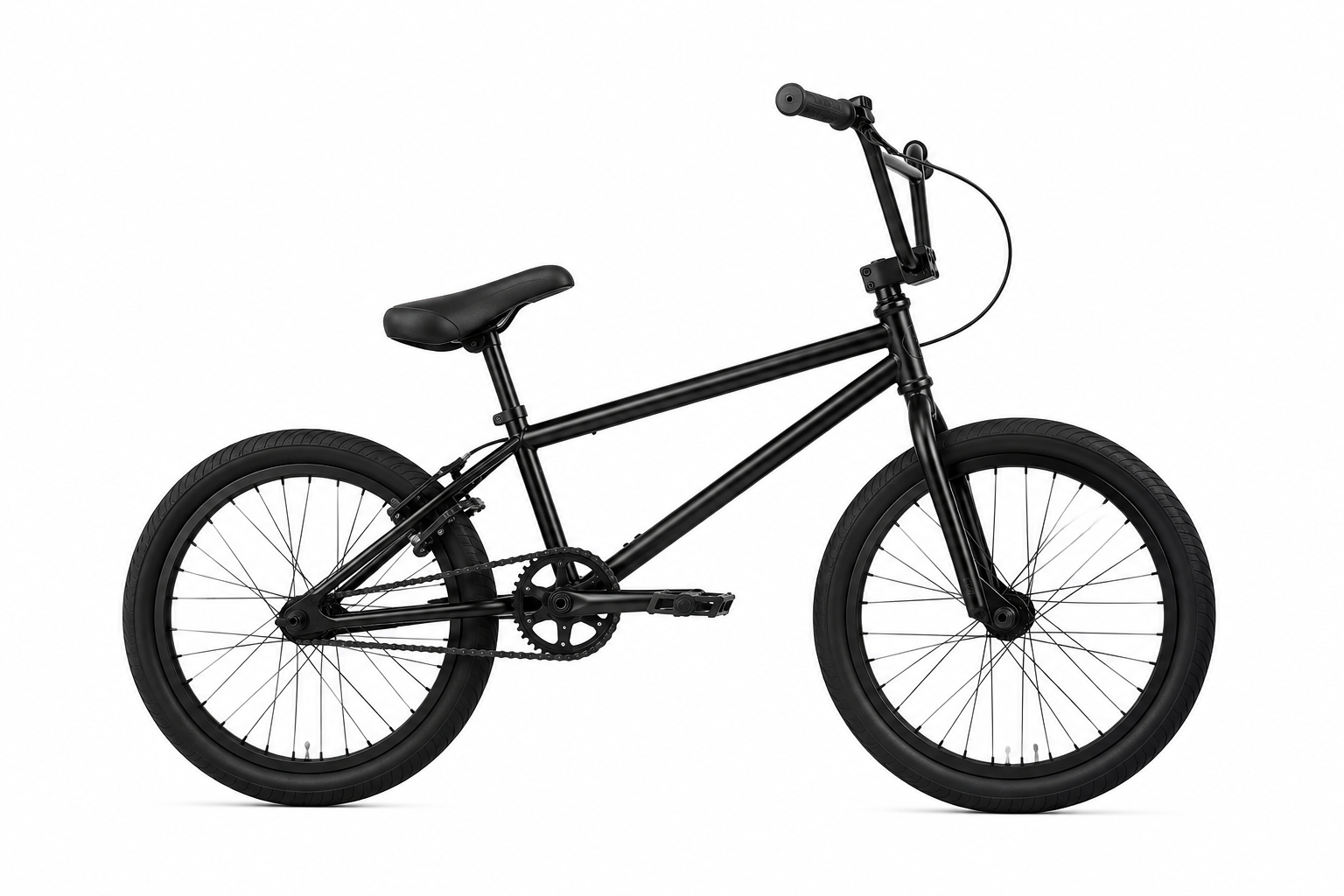
BMX bicycle: a freestyle build with 20-inch wheels, a chromoly steel frame, and a rear U-brake, built for stunt and skatepark riding.
What Is a BMX Bicycle?
A BMX (Bicycle Motocross) bicycle is a small-wheeled, single-speed bike originally developed for off-road racing and later heavily adapted for freestyle and stunt riding. Unlike a mountain bike or /bicycle-types/road/road-bicycle, a BMX bicycle has no suspension, no gear-shifting system, and a compact, low-standover frame designed for quick, precise handling rather than covering distance efficiently.
The defining trait of a BMX bicycle is its simplicity: one gear, one brake (often just a rear brake, or none at all on some freestyle setups), and a frame reinforced specifically to absorb repeated impacts from jumps, drops, and tricks.
Key Characteristics of a BMX Bicycle
- Small wheels — typically 20 inches, which allow for quicker rotation, tighter turns, and easier mid-air control during tricks.
- Single-speed drivetrain — no derailleur or gear shifting, which reduces mechanical failure points and simplifies maintenance under repeated stress.
- Reinforced frame — built from chromoly or hi-tensile steel rather than aluminum, prioritizing impact resistance over light weight.
- Rigid, no-suspension design — suspension would absorb energy needed for jumps and add weight and complexity that isn’t useful for BMX-style riding.
- Compact geometry — a shorter wheelbase and lower standover height than other bicycle types, giving the rider more control for tight maneuvers and body positioning during tricks.
BMX Bicycle Specs at a Glance
Key Dimensions & Components
| Wheel Size | 20 inches |
| Brakes | Rear U-Brake |
| Weight | 22–26 lbs |
| Frame Material | Chromoly / Hi-Tensile Steel |
| Speeds | Single-Speed (25/9) |
| Suspension | Rigid (No Suspension) |
| Motor | N/A (Non-Electric) |
| Rider Level | Beginner |
| Specific Use | Freestyle & Stunt Riding |
| Price Range | $200–$450 |
This standard BMX bicycle configuration pairs a chromoly or hi-tensile steel frame with a single-speed 25/9 gear ratio and a rear U-brake, giving riders a durable, low-maintenance setup built specifically for freestyle and stunt riding rather than distance or speed.
Standard vs. Kids BMX Bicycles
BMX bicycles generally split into two categories based on rider age and experience level.
For younger or beginner riders learning freestyle and skatepark basics, the kids BMX bicycle scales the standard platform down to a smaller, more manageable size.
Key Dimensions & Components
| Spec | Kids BMX Bicycle |
| Wheel Size | 18–20 inches |
| Brakes | Coaster + Hand Brake |
| Weight | 20–26 lbs |
| Frame Material | Hi-Tensile Steel |
| Speeds | Single-Speed (1-Speed) |
| Suspension | Rigid (No Suspension) |
| Motor | N/A (Non-Electric) |
| Rider Level | Beginner & Intermediate |
| Specific Use | Freestyle & Skatepark Riding |
| Price Range | $150–$400 |
The key difference between a standard and kids BMX bicycle is the braking setup: kids’ models typically add a coaster brake alongside a hand brake, giving newer riders a more intuitive and forgiving way to slow down while they build the hand-braking skills used on standard BMX bicycles.
Types of BMX Riding
Not every BMX bicycle is optimized for the same discipline. Understanding the main styles explains why frame geometry and components vary within the category:
- Freestyle/Park – Focused on tricks, grinds, and airs performed on ramps, rails, and skatepark features. Freestyle BMX bicycles prioritize a strong, impact-resistant frame and simple, reliable brakes.
- Street – Uses urban obstacles — stairs, ledges, handrails — as the riding terrain. Street-focused BMX bicycles are often built with reinforced frames to handle hard landings on concrete.
- Dirt Jumping – Riding over constructed dirt jumps and transitions, requiring precise control in the air and a durable frame for repeated hard landings.
- Racing – The original BMX discipline, involving multiple riders racing on a dirt track with jumps and berms. Racing BMX bicycles are typically lighter than freestyle models, prioritizing acceleration over trick durability.
- Flatland – Technical, balance-based tricks performed on flat, smooth ground without ramps or jumps, often using a BMX bicycle with a lighter frame optimized for spins and pivots rather than impact resistance.
Most beginner riders start with a general freestyle or park-oriented BMX bicycle, since it’s versatile enough to handle skatepark riding, light street use, and basic dirt jumping without being over-specialized for one discipline.
Benefits of a BMX Bicycle
- Exceptional durability — chromoly and hi-tensile steel frames are built to absorb repeated hard impacts that would damage a lighter aluminum frame.
- Low maintenance complexity — a single-speed drivetrain with no derailleur means fewer components to adjust, tune, or replace.
- Precise handling — the compact frame and small wheels give riders sharp, responsive control for tricks and tight maneuvers.
- Lower cost of entry — most BMX bicycles are more affordable than geared bicycle types, making the sport accessible to new riders.
Limitations of a BMX Bicycle
- No gearing range — a single-speed drivetrain means no adjustment for hills or long-distance efficiency.
- Not built for distance — the compact geometry and small wheels make a BMX bicycle inefficient and uncomfortable for commuting or long rides.
- Heavier frame materials — steel construction, while durable, adds weight compared to aluminum-framed bicycles of similar size.
- Limited braking on some setups — certain freestyle BMX bicycles are ridden with reduced or no braking systems, which requires more rider skill to manage speed safely.
Who Is a BMX Bicycle Suitable For?
A BMX bicycle suits riders who:
- Want to learn or practice freestyle tricks, jumps, or skatepark riding.
- Ride primarily short distances at a skatepark, dirt track, or urban riding spot rather than commuting.
- Value a durable, low-maintenance bike that can handle repeated impacts.
- Are new to the sport and want an affordable entry point (particularly with a kids BMX bicycle).
A BMX bicycle is generally not the right choice for commuting, fitness riding, or long-distance travel — those needs are better served by a hybrid bicycle, /bicycle-types/commuter/commuter-bicycle, or /bicycle-types/road/road-bicycle.
BMX Bicycle vs. Other Bicycle Types
| Factor | BMX Bicycle | Mountain Bike | Folding Bike |
| Wheel Size | 20 inches | 26.5–29 inches | 20 inches |
| Gearing | Single-speed | Multi-speed (21-Speed) | Multi-speed (7-Speed) |
| Suspension | None | Front or full | None |
| Best For | Freestyle & stunt riding | Trail riding | Urban commuting & storage |
| Price Range | $150–$450 | $350–$3,000 | $250–$800 |
A BMX bicycle and a /bicycle-types/folding/folding-bike share similar 20-inch wheel sizes, but serve entirely different purposes — the BMX bicycle is built for impact resistance and trick performance, while the folding bike prioritizes portability and multimodal commuting. Neither is a substitute for the other despite the similar wheel size.
How to Choose the Right BMX Bicycle
Answering these questions solves the most common BMX bicycle buying mistakes:
- What’s your riding discipline? Park and street riding favor a durable, general-purpose freestyle BMX bicycle; racing favors a lighter frame built for acceleration.
- What’s your experience level? Beginners, especially younger riders, generally do better starting on a kids BMX bicycle with more forgiving coaster-plus-hand-brake setups.
- What’s your budget? Standard BMX bicycles start around $200–$450; kids’ models built for younger riders run $150–$400.
- What frame material do you need? Chromoly steel is lighter and often preferred by more experienced riders; hi-tensile steel is heavier but more affordable and still highly durable.
- What braking setup fits your skill level? New riders often benefit from retaining a hand brake rather than moving straight to brakeless freestyle setups.
BMX Bicycle Sizing & Fit
BMX bicycle sizing is based primarily on top tube length and wheel size rather than the frame-height-based sizing used on road or mountain bikes. A shorter top tube suits riders who prioritize tight, technical control (common in flatland and park riding), while a longer top tube offers more stability at speed, which is often preferred in racing or dirt jumping. Standover height also matters more on a BMX bicycle than on other bicycle types, since riders frequently reposition their body over the frame during tricks — a frame that’s too tall can limit control during technical maneuvers.
BMX Bicycle Maintenance Tips
A BMX bicycle takes more repeated physical stress than most other bicycle types, so maintenance focuses on structural integrity as much as mechanical function:
- Inspect the frame and welds regularly for cracks or stress fractures, especially after hard landings or drops.
- Check spoke tension frequently, since the repeated impact of jumps and landings can loosen wheel spokes faster than normal riding.
- Maintain the single-speed chain — while simpler than a geared drivetrain, chain tension still needs regular checking to prevent slipping during hard pedaling.
- Inspect the rear U-brake for cable stretch or pad wear, particularly on models where the rear brake is the primary or only stopping method.
BMX Bicycle Safety Tips
- Wear a /safety-and-security/helmets/bicycle-helmet rated for impact protection, since BMX riding involves a higher risk of falls than casual cycling.
- Use pads (knee, elbow) when attempting new tricks or riding unfamiliar terrain — while not bicycle equipment specifically, this protective gear is a standard part of BMX riding safety.
- Secure the bike with a /safety-and-security/locks/bicycle-lock at skateparks or public riding spots, where BMX bicycles are a common theft target.
- Inspect the frame and brakes before every session, given how much repeated stress a BMX bicycle absorbs compared to other bicycle types.
FAQ
What makes a BMX bicycle different from a regular bike?
A BMX bicycle uses a single-speed drivetrain, no suspension, and a reinforced steel frame built specifically to absorb repeated impacts from jumps and tricks, unlike geared bicycles designed for distance or speed.
How much does a BMX bicycle cost?
A standard BMX bicycle typically costs $200–$450, while a kids BMX bicycle built for younger or beginner riders runs $150–$400.
What age is a BMX bicycle suitable for?
Standard BMX bicycles are generally built for older kids, teens, and adults, while a kids BMX bicycle with smaller 18–20 inch wheels and a coaster-plus-hand-brake setup is designed specifically for younger or newer riders.
Do BMX bicycles have gears?
No — nearly all BMX bicycles use a single-speed drivetrain, which reduces mechanical complexity and keeps the bike lighter and more durable for freestyle and stunt riding.
What frame material is best for a BMX bicycle?
Chromoly steel is lighter and often preferred by more experienced riders for its strength-to-weight ratio, while hi-tensile steel is heavier but more affordable and still highly durable, making it common on entry-level and kids’ BMX bicycles.
Related Guides
Bicycle Types — Compare the BMX bicycle against all 10 major bicycle types.
Kids BMX Bicycle — A smaller, beginner-friendly BMX build.
Mountain Bike — Another off-road-capable bicycle type for comparison.
Bicycle Safety & Security — Helmets and locks suited for BMX riding and skatepark storage.