


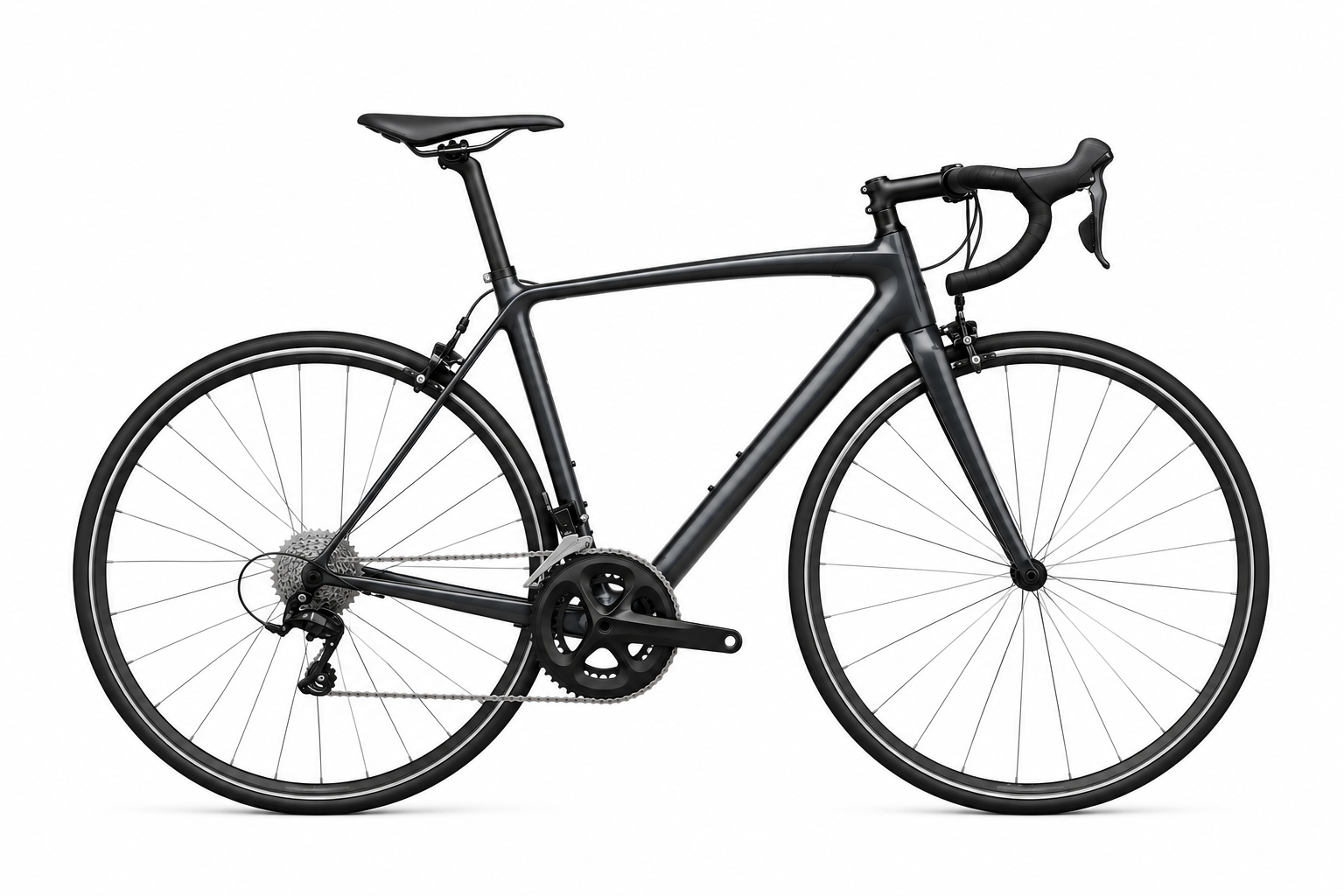
Road bicycle: a lightweight racing build with a 700c wheelset, drop handlebars, and a 16–18 speed drivetrain, built for speed on paved roads.
Introduction
A road bicycle is engineered around a single goal: covering paved distance as efficiently as possible. Narrow tires, drop handlebars, a lightweight frame, and no suspension all work together to minimize weight and rolling resistance. Among all the bicycle types built for speed, the road bicycle remains the standard choice for racers, endurance riders, and anyone who wants to cover long paved distances quickly. This guide covers how a road bicycle is built, the difference between aluminum and carbon fiber models, full specs and pricing, and a complete framework for choosing the right one.

Road bicycle: a lightweight racing build with a 700c wheelset, drop handlebars, and a 16–18 speed drivetrain, built for speed on paved roads.
What Is a Road Bicycle?
A road bicycle is a bike designed specifically for riding on paved surfaces at speed. Unlike a mountain bike or hybrid bicycle, a road bicycle has no suspension, uses narrow high-pressure tires to reduce rolling resistance, and positions the rider in a lower, more aerodynamic posture through drop handlebars. These design choices trade off comfort and off-road capability in exchange for maximum efficiency on smooth pavement.
Aluminum vs. Carbon Fiber Road Bicycles
Road bicycles are generally built around one of two frame materials:
- Aluminum Road Bicycle – Stiff, durable, and more affordable. A 6061 aluminum alloy frame keeps weight in the 18–24 lb range, making it a strong entry point for new road cyclists.
- Carbon Fiber Road Bicycle – Lighter and more compliant, absorbing road vibration better than aluminum. Carbon fiber (often T800-grade) drops weight to 17–21 lbs, at a significantly higher price point aimed at racing and long-distance endurance riding.
The choice between the two usually comes down to budget and riding goals: aluminum road bicycles offer excellent value for training and fitness riding, while carbon fiber road bicycles suit riders chasing lower weight and smoother long-distance performance.
Road Bicycle Specs at a Glance
Key Dimensions & Components
| Spec | Road Bicycle |
| Wheel Size | 700c |
| Brakes | Rim Brakes / Disc |
| Weight | 18–24 lbs |
| Frame Material | 6061 Aluminum Alloy |
| Speeds | 16–18 Speed (2×8/2×9) |
| Suspension | Rigid (No Suspension) |
| Motor | N/A (Non-Electric) |
| Rider Level | Intermediate |
| Specific Use | Road Racing & Speed |
| Price Range | $400–$900 |
This standard road bicycle configuration favors a lightweight aluminum frame paired with a 16–18-speed drivetrain, providing enough gear range for climbs and flats while keeping the overall weight low enough for competitive group rides and racing.
Popular Road Bicycle Variation: Carbon Road Bicycle
For riders prioritizing endurance and top-end performance, the carbon road bicycle upgrades the standard aluminum platform with a lighter, more compliant frame.
Key Dimensions & Components
| Spec | Carbon Road Bicycle |
| Wheel Size | 700c |
| Brakes | Hydraulic Disc |
| Weight | 17–21 lbs |
| Frame Material | Carbon Fiber (T800) |
| Speeds | 2×11 Speed (Shimano 105) |
| Suspension | Rigid (No Suspension) |
| Motor | N/A (Non-Electric) |
| Rider Level | Intermediate & Advanced |
| Specific Use | Road Racing & Endurance |
| Price Range | $1,800–$4,000 |
A carbon road bicycle typically adds hydraulic disc brakes and a wider-range 2×11 Shimano 105 drivetrain on top of the weight savings, giving racers and endurance riders both stronger stopping power and finer gear increments for long climbs.
Road Bicycle vs. Other Bicycle Types: Which Should You Choose?
| Factor | Road Bicycle | Mountain Bike | Gravel Bicycle |
| Terrain | Paved roads only | Dirt, rocky trails | Mixed terrain, dirt roads |
| Tire Width | Narrow, smooth | Wide, knobby | Medium, textured |
| Suspension | None | Front or full | None |
| Weight | 17–24 lbs | 28–37 lbs | 22–28 lbs |
| Price Range | $400–$4,000 | $350–$3,000 | $800–$1,500 |
If your riding is entirely on pavement and speed is the priority, a road bicycle’s low weight and efficient geometry make it the clear choice. If your routes mix pavement with dirt roads or light trails, a gravel bicycle offers more versatility, while true off-road trails call for a dedicated mountain bike.
It’s worth noting that a road bicycle and a gravel bicycle often share similar weight ranges and drivetrain components, but differ mainly in tire clearance and frame geometry — a road bicycle is tuned for narrow, high-pressure tires and a more aggressive riding position. In contrast, a gravel bicycle trades some top-end speed for stability and tire versatility on rougher surfaces.
How to Choose the Right Road Bicycle
Answering these questions solves the most common road bicycle buying mistakes:
- What’s your primary goal — racing, fitness, or endurance? Racing and endurance riders benefit most from the lower weight of a carbon road bicycle; fitness riders often do just as well on aluminum.
- What’s your budget? Standard aluminum road bicycles start around $400–$900; carbon fiber models built for racing run $1,800–$4,000.
- Do you need disc brakes? Hydraulic disc brakes (common on carbon road bicycles) offer stronger, more consistent stopping power in wet conditions than traditional rim brakes.
- How far and how often will you ride? Frequent long-distance riders benefit from a carbon road bicycle’s vibration-dampening properties, which reduce fatigue over multi-hour rides.
- What gearing range do you need? A wider-range drivetrain (like 2×11) makes climbing easier without sacrificing top-end speed on flats and descents.
Road Bicycle Riding Disciplines Explained
Not every road bicycle is optimized for the same kind of riding. Understanding the main disciplines explains why geometry, weight, and gearing vary across the category:
- Racing – Built for maximum speed and aggressive, low-front-end geometry. Racing road bicycles prioritize stiffness and low weight, often in the 15–18 lb range for top-tier carbon models.
- Endurance – Built for comfort over long distances, with a slightly taller front end and a more compliant frame to reduce fatigue on multi-hour rides. Endurance road bicycles typically weigh a bit more than pure racing models but stay well under 22 lbs.
- Aero – Optimized specifically for aerodynamic efficiency, using shaped tube profiles and integrated cockpits to cut wind resistance at race pace, often at a small weight penalty compared to pure climbing-focused frames.
- Touring – Built with a longer wheelbase, additional mounting points for racks and bags, and a more relaxed geometry for stability while carrying gear over long, multi-day rides.
Most riders buying their first road bicycle fall into the endurance category, since it balances speed with a riding position that’s sustainable over long distances without the specialized trade-offs of a pure racing or aero build.
Understanding Road Bicycle Gearing & Groupsets
The “speed” number on a road bicycle (like 16-Speed or 2×11) refers to the total combination of front chainrings and rear cassette cogs:
- 2×8 / 2×9 (16–18 Speed) – Standard on entry-level aluminum road bicycles, offering a solid gear range for most terrain without added drivetrain complexity.
- 2×11 (22 Speed) – Found on higher-end carbon road bicycles like Shimano 105-equipped models, giving finer gear steps for climbing and maintaining cadence at speed.
- 1x Drivetrains – Increasingly common on gravel-leaning road bicycles, simplifying shifting with a single front chainring at the cost of some gear range.
A wider gear range matters most for riders tackling varied terrain or steep climbs, while racers on mostly flat courses often prioritize tighter gear steps for maintaining an optimal cadence.
Road Bicycle Maintenance Tips
A road bicycle’s lightweight components and higher tire pressures mean maintenance needs are different from a mountain or commuter bike:
- Check tire pressure before every ride — road bicycle tires run much higher PSI and lose pressure faster than wider tires.
- Inspect the drivetrain regularly — the tighter gear spacing on 16–18 or 2×11 speed setups is more sensitive to a dirty or worn chain.
- Watch for carbon frame damage — carbon fiber road bicycles can develop hairline cracks from impacts that wouldn’t affect an aluminum frame; inspect after any hard hit or crash.
- Replace brake pads proactively — whether rim or disc, road bicycle brake pads wear faster under frequent high-speed stops.
For a full parts breakdown by component, see our road bike parts guide, including a closer look at the road bike pedal.
Road Bicycle Accessories You’ll Need
Outfitting a road bicycle properly improves both comfort and performance on longer rides:
- Road bike accessories — saddle bags, bottle cages, and computer mounts built for road bicycle frames and geometry.
- Bicycle accessories — general add-ons like racks and mirrors adaptable to most road bicycle setups.
Road Bicycle Safety Tips
Because a road bicycle is ridden at higher average speeds in traffic, safety gear matters more:
- Wear a road bike helmet designed for aerodynamics and ventilation at higher speeds.
- Compare options with our full guide to road helmets before buying.
- Use a reliable bicycle lock — carbon road bicycles are a high-value target for theft when left unattended.
- Add a bicycle light for early-morning or evening rides, when road cyclists share the road with limited visibility.
Frequently Asked Questions About Road Bicycles
What’s the difference between an aluminum and carbon road bicycle?
An aluminum road bicycle is heavier (18–24 lbs) and more affordable, while a carbon fiber road bicycle is lighter (17–21 lbs), absorbs road vibration better, and costs significantly more — typically $1,800–$4,000 versus $400–$900.
How much does a road bicycle cost?
A standard road bicycle costs $400–$900, while a carbon road bicycle built for racing and endurance runs $1,800–$4,000.
Is a road bicycle good for beginners?
Yes — a road bicycle is a solid choice for beginners focused on fitness or paved-road riding, though the narrow tires and drop handlebars require some adjustment compared to a more upright hybrid bicycle.
Can I use a road bicycle for commuting?
A road bicycle works well for commuting on paved routes where speed matters, though its narrow tires and lack of suspension make it less forgiving on rough pavement than a commuter bicycle built specifically for daily city riding.
Should I choose rim brakes or disc brakes on a road bicycle?
Disc brakes, especially hydraulic disc brakes found on carbon road bicycles, offer stronger and more consistent stopping power in wet or hilly conditions, while rim brakes remain lighter and simpler to maintain for riders who stick to dry, flat routes.
Related Guides
- Bicycle Types — Compare the road bicycle against all 10 major bicycle types.
- Road Bike Parts — A full breakdown of every road bicycle component, including pedals.
- Road Bike Accessories — Saddle bags, cages, and mounts built for road riding.
- Bicycle Safety & Security — Helmets, locks, and lights suited for road cycling.