


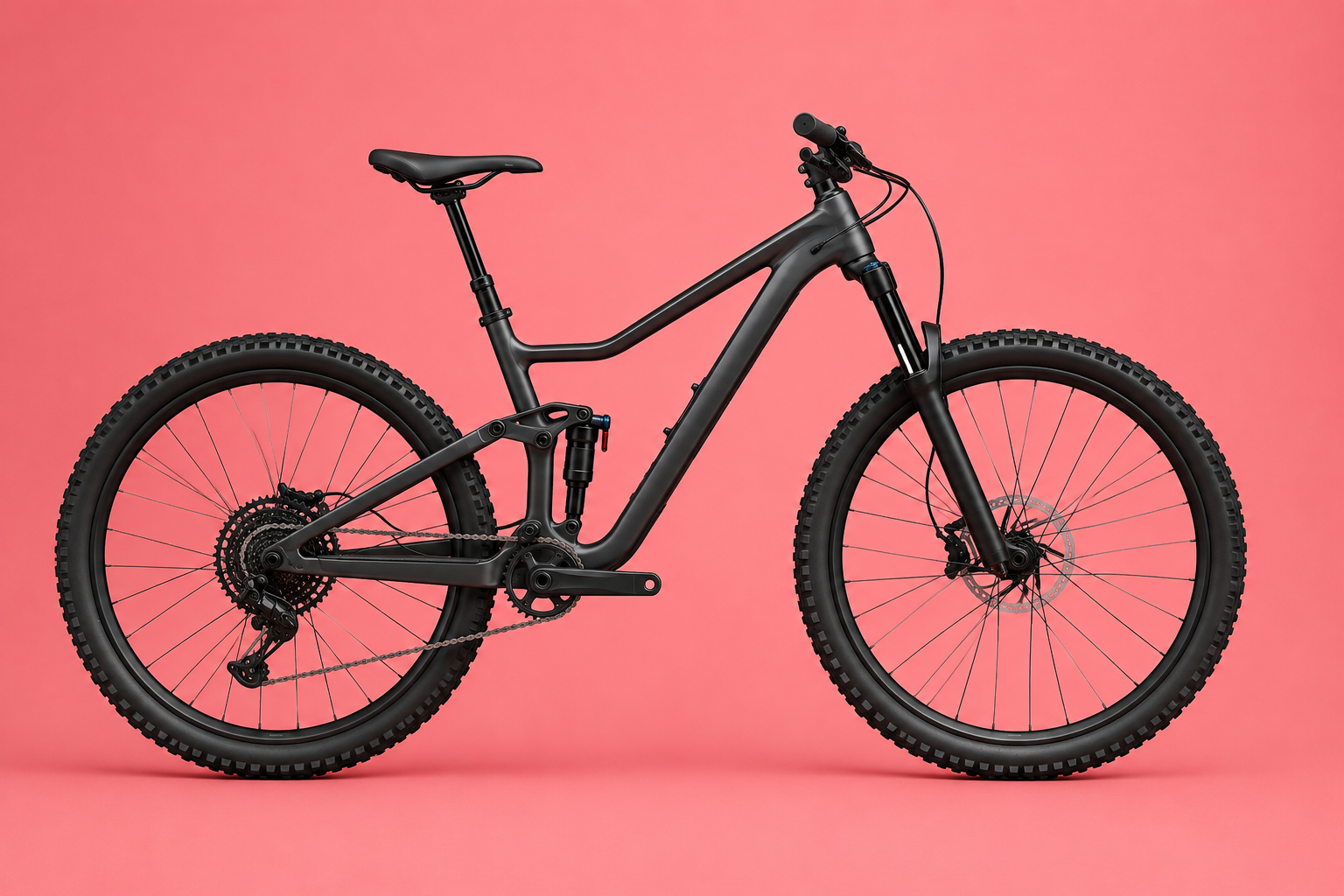
Mountain bike: a hardtail trail build with front suspension, disc brakes, and a 21-speed drivetrain for rugged off-road terrain.
Introduction
A mountain bike is built for one job above all others: handling rough, unpredictable terrain without losing control or comfort. Wide knobby tires, front or full suspension, and a rugged frame set the mountain bike apart from every other category of bicycle riders search for. Whether you’re riding smooth dirt paths or technical, rock-strewn singletrack, this guide breaks down how a mountain bike is built, the difference between hardtail and full-suspension models, full specs and pricing, and a complete framework for choosing the right one.

Mountain bike: a hardtail trail build with front suspension, disc brakes, and a 21-speed drivetrain for rugged off-road terrain.
What Is a Mountain Bike?
A mountain bike (MTB) is a bicycle designed specifically for off-road use — dirt trails, rocky paths, roots, and steep, uneven terrain that would damage or destabilize a road or hybrid bike. The defining features of a mountain bike are wide, knobby tires for traction, a suspension system to absorb impacts, a lower and more stable frame geometry, and stronger disc brakes for reliable stopping power in wet or loose conditions.
Hardtail vs. Full-Suspension Mountain Bikes
Mountain bikes generally fall into two structural categories:
- Hardtail Mountain Bike – Front suspension only, with a rigid rear frame. Lighter, more efficient for pedaling, and typically more affordable — a common choice for beginner and intermediate trail riders.
- Full-Suspension Mountain Bike – Front and rear suspension, absorbing impacts from both ends. Heavier and pricier, but far more capable on technical, high-speed, or rocky descents.
Choosing between the two comes down to terrain: smoother trails and cross-country riding favor a hardtail mountain bike, while aggressive, rocky, or downhill-heavy trails call for full suspension.
Mountain Bike Riding Disciplines Explained
Not every mountain bike is built for the same kind of riding. Understanding the main disciplines helps explain why suspension travel, geometry, and weight vary so much across the category:
- Cross-Country (XC) – Focused on speed and endurance over rolling terrain. XC mountain bikes are lightweight, often hardtail, with 80–100mm of suspension travel optimized for efficient pedaling.
- Trail – The most common all-around mountain bike style, balancing climbing efficiency with descending capability. Trail mountain bikes typically run 120–140mm of suspension travel and suit the widest range of riders.
- All-Mountain / Enduro – Built for aggressive, technical terrain with steep climbs and fast, rough descents. These mountain bikes use 140–170mm of travel and heavier-duty components to handle repeated hard impacts.
- Downhill – Designed purely for descending on lift-served or shuttled terrain, with 170–200mm of travel, reinforced frames, and geometry that sacrifices climbing ability entirely for stability at speed.
Most riders shopping for their first mountain bike will fall into the trail category, since it offers the best balance of climbing comfort and descending confidence without the specialized trade-offs of XC or downhill builds.
Mountain Bike Specs at a Glance
Key Dimensions & Components
| Spec | Mountain Bike |
| Wheel Size | 26.5–29 inches |
| Brakes | Disc |
| Weight | 30–37 lbs |
| Frame Material | 6061 Aluminum Alloy |
| Speeds | 21-Speed / 1×10 |
| Suspension | Front Suspension (Hardtail) |
| Motor | N/A (Non-Electric) |
| Rider Level | Intermediate |
| Specific Use | Trail Riding |
| Price Range | $350–$800 |
This standard mountain bike configuration is a hardtail build — front suspension, a wide 21-speed gear range for climbing and descending, and a 30–37 lb aluminum frame that balances durability with a manageable weight for most trail riders.
Popular Mountain Bike Variation: Full-Suspension Mountain Bike
For riders tackling technical, rocky, or high-speed descents, the full-suspension mountain bike adds rear shock absorption to the standard hardtail platform.
Key Dimensions & Components
| Spec | Full-Suspension Mountain Bike |
| Wheel Size | 27.5–29 inches |
| Brakes | Hydraulic Disc |
| Weight | 28–35 lbs |
| Frame Material | 6061 Aluminum Alloy |
| Speeds | 1×10 / 1×11 Speed |
| Suspension | Full Suspension (120–150mm) |
| Motor | N/A (Non-Electric) |
| Rider Level | Intermediate & Advanced |
| Specific Use | All-Mountain & Technical Trails |
| Price Range | $1,200–$3,000 |
Despite adding a rear shock, a full-suspension mountain bike is often only slightly heavier — and sometimes lighter — than a standard hardtail mountain bike, thanks to a simplified 1×10/1×11 drivetrain and lighter-weight suspension components designed for technical terrain.
Mountain Bike vs. Other Bicycle Types: Which Should You Choose?
| Factor | Mountain Bike | Road Bicycle | Hybrid Bicycle |
| Terrain | Dirt, rocky trails, technical terrain | Paved roads only | Pavement & light gravel |
| Tire Width | Wide, knobby | Narrow, smooth | Medium |
| Suspension | Front or full | None | Rigid or front |
| Weight | 30–37 lbs (hardtail) | 18–24 lbs | 22–28 lbs |
| Price Range | $350–$3,000 | $400–$4,000 | $350–$750 |
If your riding mostly takes place on dirt, roots, or rocky singletrack, a mountain bike’s suspension and tire traction make it the only realistic choice. For paved commuting or fitness riding, a road bicycle or hybrid bicycle will be lighter, faster, and more efficient.
How to Choose the Right Mountain Bike
Answering these questions solves the most common mountain bike buying mistakes:
- What terrain will you ride most? Smooth, flowy trails suit a hardtail mountain bike; rocky, technical, or downhill-heavy terrain calls for full suspension.
- What’s your experience level? Beginners generally do well starting on a hardtail mountain bike — it’s lighter, easier to maintain, and more forgiving to learn on.
- How much suspension travel do you need? 100–120mm suits cross-country riding; 130–150mm+ suits aggressive all-mountain and technical trails.
- What’s your budget? Entry-level hardtail mountain bikes start around $350; full-suspension models built for technical trails run $1,200–$3,000.
- How often will you ride? Frequent trail riders benefit from investing in a full-suspension mountain bike sooner, since it reduces fatigue and improves control over repeated rough terrain.
Mountain Bike Maintenance Tips
A mountain bike takes far more abuse than a road or commuter bike, so maintenance needs to happen more often:
- Clean the drivetrain after muddy or dusty rides to prevent premature chain and cassette wear.
- Check suspension seals regularly — dirt buildup on fork stanchions shortens suspension lifespan.
- Inspect disc brake pads frequently, since off-road riding wears pads faster than road use.
- Monitor tire pressure closely, since mountain bike tires run lower PSI for traction and are more prone to pinch flats.
For a full parts breakdown by component, see our mountain bike parts guide.
Mountain Bike Accessories You’ll Need
Outfitting a mountain bike properly improves both performance and durability on the trail:
- Bicycle accessories — general add-ons including racks, mirrors, and mounts adaptable to most mountain bike frames.
- Hydration packs and trail tools — not always sold as bike-specific accessories, but essential for longer mountain bike rides away from support.
Mountain Bike Safety Tips
Because mountain biking involves higher-impact, higher-risk terrain than road or commuter riding, safety gear matters more:
- Wear a bicycle helmet rated for trail or all-mountain use, not just road cycling.
- Use a reliable bicycle lock at trailheads, where mountain bikes are a common theft target.
- Carry a bicycle light if you ride at dawn, dusk, or on trails with limited visibility.
Frequently Asked Questions About Mountain Bikes
What’s the difference between a hardtail and full-suspension mountain bike?
A hardtail mountain bike has front suspension only, making it lighter and more efficient for pedaling, while a full-suspension mountain bike adds rear shock absorption for better control on technical or high-speed terrain, at the cost of extra weight and price.
How much does a mountain bike cost?
A standard hardtail mountain bike typically costs $350–$800, while a full-suspension mountain bike built for technical trails runs $1,200–$3,000.
Is a mountain bike good for commuting?
A mountain bike can handle commuting, but its wider tires and heavier frame make it slower and less efficient on pavement compared to a hybrid bicycle or commuter bicycle built specifically for road use.
What size mountain bike wheels are best?
Mountain bikes typically run 26.5–29-inch wheels; larger 29-inch wheels roll over obstacles more easily and hold speed better, while smaller wheels offer quicker handling on tight, technical trails.
Do I need a full-suspension mountain bike as a beginner?
Not necessarily — most beginners get more value starting on a hardtail mountain bike, which is lighter, less expensive, and easier to maintain while building trail skills, before upgrading to full suspension.
Related Guides
- Bicycle Types — Compare the mountain bike against all 10 major bicycle types.
- Mountain Bike Parts — A full breakdown of every mountain bike component.
- Bicycle Accessories — Racks, mounts, and add-ons suited to trail riding.
- Bicycle Safety & Security — Helmets, locks, and lights for trail and off-road riding.